An Apology for Idlers
- … But though this is one difficulty of the subject, it is not the greatest. You could not be put in prison for speaking against industry, but you can be sent to Coventry for speaking like a fool. The greatest difficulty with most subjects is to do them well; therefore, please to remember this is an apology. It is certain that much may be judiciously argued in favour of diligence; only there is something to be said against it, and that is what, on the present occasion, I have to say. To state one argument is not necessarily to be deaf to all others, and that a man has written a book of travels in Montenegro, is no reason why he should never have been to Richmond.
- It is surely beyond a doubt that people should be a good deal idle in youth. For though here and there a Lord Macaulay may escape from school honours with all his wits about him, most boys pay so dear for their medals that they never afterwards have a shot in their locker, and begin the world bankrupt. And the same holds true during all the time a lad is educating himself, or suffering others to educate him. It must have been a very foolish old gentleman who addressed Johnson at Oxford in these words: “Young man, ply your book diligently now, and acquire a stock of knowledge; for when years come upon you, you will find that poring upon books will be but an irksome task.” The old gentleman seems to have been unaware that many other things besides reading grow irksome, and not a few become impossible, by the time a man has to use spectacles and cannot walk without a stick. Books are good enough in their own way, but they are a mighty bloodless substitute for life. It seems a pity to sit, like the Lady of Shalott, peering into a mirror, with your back turned on all the bustle and glamour of reality. And if a man reads very hard, as the old anecdote reminds us, he will have little time for thought.
- If you look back on your own education, I am sure it will not be the full, vivid, instructive hours of truantry that you regret; you would rather cancel some lack-lustre periods between sleep and waking in the class. For my own part, I have attended a good many lectures in my time. I still remember that the spinning of a top is a case of Kinetic Stability. I still remember that Emphyteusis is not a disease, nor Stillicide a crime. But though I would not willingly part with such scraps of science, I do not set the same store by them as by certain other odds and ends that I came by in the open street while I was playing truant. …
Words to know
- industry B1
- here: hard, steady work; being busy — Branche, Wirtschaftszweig — industria — industrie — settore — branża — indústria — промышленность, индустрия, отрасль — endüstri — промисловість, галузь, індустрія
- apology B1
- here: a written defence of an idea, not saying sorry — Entschuldigung — disculpa — excuse — scuse — przeprosiny — desculpa — извинение, прощение, оправдание — özür — вибачення, пробачення, перепрошення
- judiciously
- with good judgement; sensibly
- diligence B1
- careful, steady effort in your work or study — Fleiß, Eifer — diligencia — diligence — pilność — diligência — прилежание, усердие, старание — çalışkanlık, özen — старанність, працьовитість, пильність
- bankrupt B2
- here: with nothing left; worn out — bankrott — quebrado, arruinado — failli, en faillite — fallito — zbankrutowany — falido — обанкротившийся — müflis — банкрут, банкрот
- irksome
- annoying and tiring — ärgerlich, lästig — fastidioso, enfadoso — fastidieux — pesante, fastidioso, irritante — irytujący, drażliwy, upierdliwy — chato, irritante — назойливый, раздражающий, докучливый — rahatsız edici, can sıkıcı, kıl — дратівливий, набридливий, надокучливий
- substitute B1
- something used instead of another thing — Ersatz — sustituto, substituto — substitut, remplaçant — sostituto, rimpiazzo — odpowiednik, zamiennik — substituto — замена, заменитель, суррогат — yedek — заміна
- truant
- playing truant: staying away from school without permission — Schulschwänzer — novillero, absentista — pigro — wagarowicz — прогульщик, прогульщица — сачок, прогульник
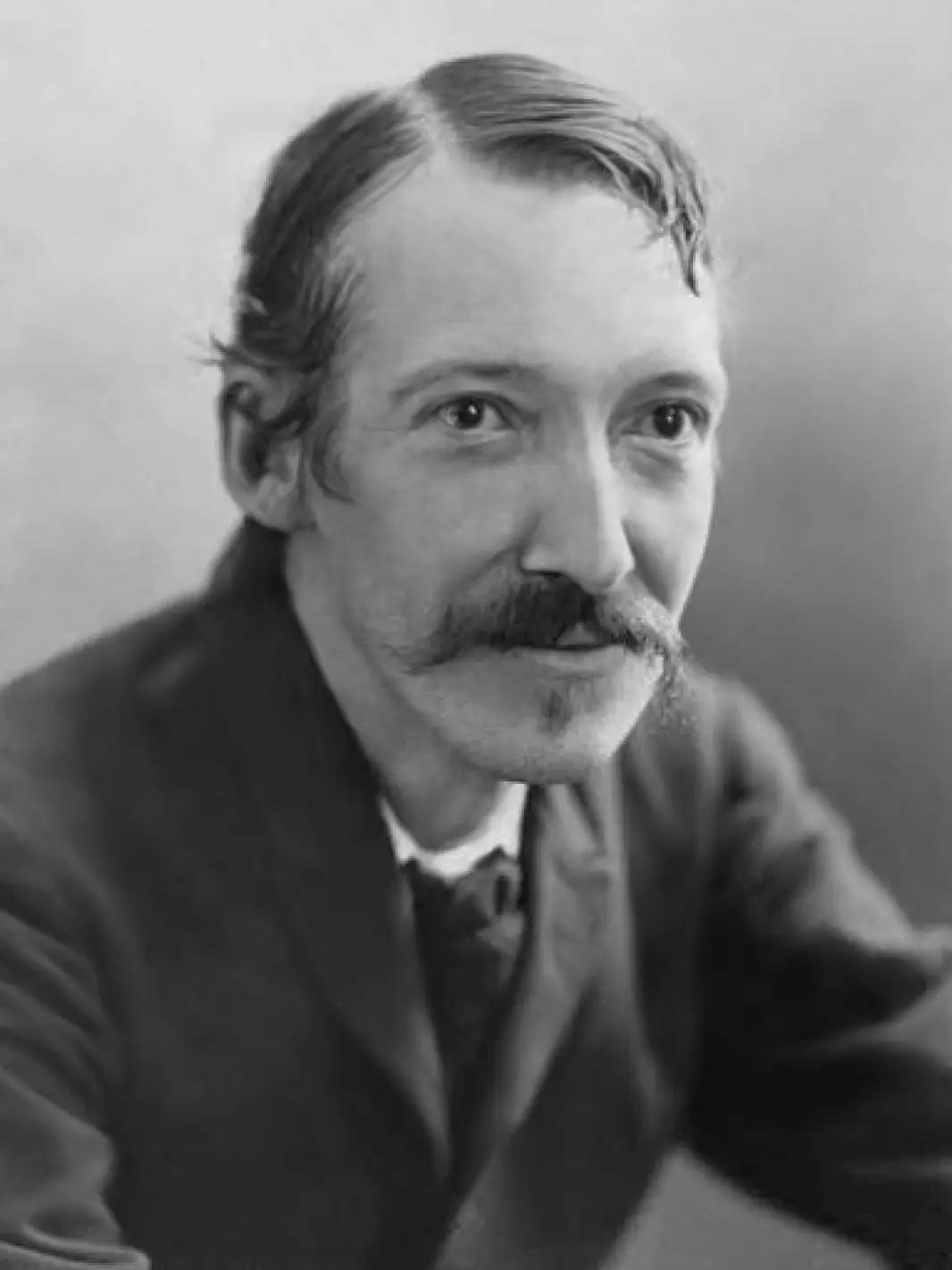
Text: Virginibus Puerisque (1881), “An Apology for Idlers”, Robert Louis Stevenson (1877), https://en.wikipedia.org/wiki/Robert_Louis_Stevenson · Public domain (https://creativecommons.org/publicdomain/mark/1.0/) · shortened · Picture: Henry Walter Barnett, Public domain (https://creativecommons.org/publicdomain/mark/1.0/), https://commons.wikimedia.org/wiki/File:Robert_Louis_Stevenson_by_Henry_Walter_Barnett_bw.jpg · Translations: English Wiktionary contributors, CC BY-SA 4.0 (https://creativecommons.org/licenses/by-sa/4.0/) · Worksheet: https://krumeto.com/read/an-apology-for-idlers
A. Choose the right answer
- What is the writer's main purpose in this excerpt? C2
- a) To warn young people that idleness leads to poverty
- b) To describe the lectures he enjoyed most at university
- c) To prove that books are useless for everyone
- d) To argue that time away from formal study can be truly educational
- In paragraph 1, the writer reminds us that "this is an apology". Here "apology" means… C1
- a) a formal defence of a position
- b) an expression of regret for a mistake
- c) a request for the reader's forgiveness
- d) a confession that the argument is weak
- What point does the example of the book about Montenegro and Richmond make? C2
- a) Writers should only describe places they know well.
- b) Arguing for one side does not mean denying the other.
- c) Short journeys teach more than long ones.
- d) Travel writers rarely know their own country.
- "Most boys pay so dear for their medals that they never afterwards have a shot in their locker." What does this suggest? C2
- a) Boys who win medals later join the army.
- b) Prize-winners hide their medals in their lockers.
- c) Winning school prizes leaves many boys exhausted, with nothing left for later life.
- d) School medals are too expensive for most families.
- How does the writer present the "old gentleman" who advised Johnson at Oxford? C2
- a) As a scholar the writer deeply admires
- b) As a wise teacher whose advice still holds
- c) As a cruel man who disliked the young
- d) As an adviser who missed a much bigger truth
- When the writer says he still remembers that "Emphyteusis is not a disease, nor Stillicide a crime", his tone is… C2
- a) gently mocking about the odd scraps his lectures left him
- b) proud of the useful law he learned
- c) serious, because these are key scientific terms
- d) angry with his poorly informed teachers
- Which statement would the writer most probably agree with? C2
- a) Books are useful, but they cannot replace lived experience.
- b) Idleness is pleasant but teaches nothing.
- c) Only very clever people can learn outside school.
- d) Students should attend every lecture to succeed in life.
B. Answer in full sentences
- Stevenson wrote this in 1877. Is his argument stronger or weaker today, when so much learning happens online? Give reasons.
- Describe something important you learned outside school or university. How did you learn it, and why has it stayed with you?
Answer key
- d) To argue that time away from formal study can be truly educational — Paragraphs 2 and 3: he says people "should be a good deal idle in youth" and values what he learned "while playing truant" above his lectures.
- a) a formal defence of a position — Paragraph 1: he will say "something… against" diligence. An apology in this old sense is a reasoned defence, as in the title.
- b) Arguing for one side does not mean denying the other. — Paragraph 1: "To state one argument is not necessarily to be deaf to all others"; the travel book is an illustration of that.
- c) Winning school prizes leaves many boys exhausted, with nothing left for later life. — Paragraph 2: they "begin the world bankrupt" — all their energy was spent on school honours.
- d) As an adviser who missed a much bigger truth — Paragraph 2: he calls him "very foolish" and says he was "unaware that many other things besides reading grow irksome" with age.
- a) gently mocking about the odd scraps his lectures left him — Paragraph 3: he calls them "scraps of science" and does not "set the same store by them" as by what he learned in the street.
- a) Books are useful, but they cannot replace lived experience. — Paragraph 2: "Books are good enough in their own way, but they are a mighty bloodless substitute for life."
Text: Virginibus Puerisque (1881), “An Apology for Idlers”, Robert Louis Stevenson (1877), https://en.wikipedia.org/wiki/Robert_Louis_Stevenson · Public domain (https://creativecommons.org/publicdomain/mark/1.0/) · shortened · Picture: Henry Walter Barnett, Public domain (https://creativecommons.org/publicdomain/mark/1.0/), https://commons.wikimedia.org/wiki/File:Robert_Louis_Stevenson_by_Henry_Walter_Barnett_bw.jpg · Translations: English Wiktionary contributors, CC BY-SA 4.0 (https://creativecommons.org/licenses/by-sa/4.0/) · Worksheet: https://krumeto.com/read/an-apology-for-idlers