Autumn
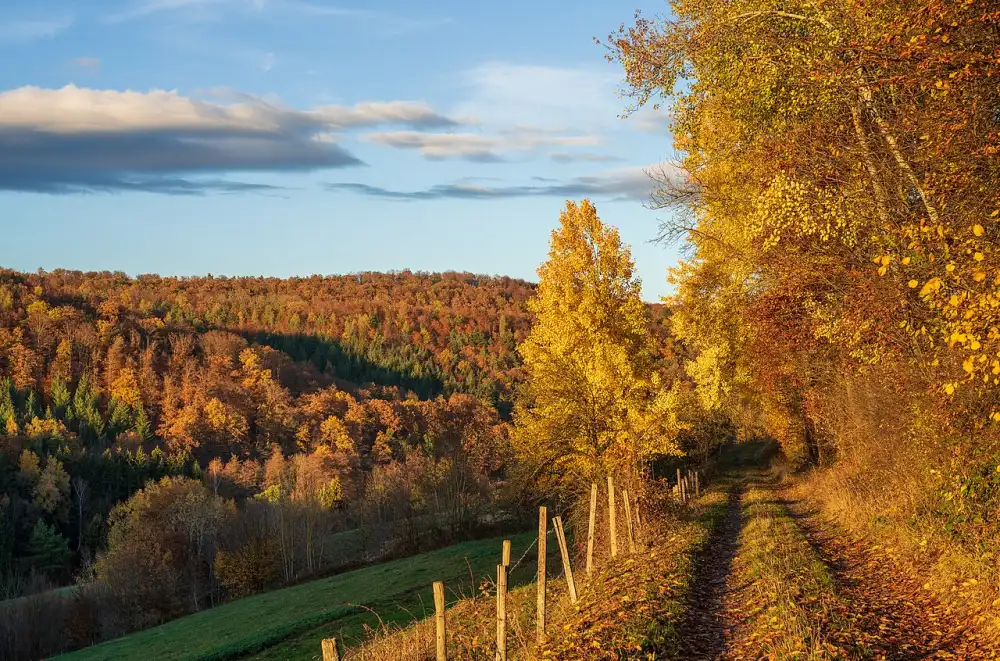
- Autumn is the season after summer and before winter. In the United States and Canada, this season is also called fall. In the Northern Hemisphere, it is often said to begin with the autumnal equinox in September and end with the winter solstice in December. In the Southern Hemisphere, it runs from the autumnal equinox in March to the winter solstice in June.
- In many places in the temperate zone, autumn is a time for harvesting most crops. Deciduous trees (trees that lose their leaves every year) lose their leaves, usually after turning yellow, red, or brown. In many countries, autumn is the time a new school year starts. The period of school between the start of September and the end of December is often referred to as the “Fall Semester”, “Fall Quarter”, or “Fall Term”.
- When it is autumn in the Northern Hemisphere, it is spring in the Southern Hemisphere. When it is autumn in the Southern Hemisphere, it is spring in the Northern Hemisphere. On the equator, autumn is very much like spring, with little difference in temperature or in weather. Autumn is a time when most animals are looking for food so they can store up for winter, because they soon will be going into hibernation. The weather gets colder and more windy. In Autumn the hours of daylight and the hours of night are the same. In autumn the weather changes all the time. The weather turns cooler and often windy and rainy.
Words to know
- hemisphere
- one half of the Earth, north or south — Hemisphäre — hemisferio — hémisphère — emisfero — półkula — hemisfério — полушарие — yarımküre — півкуля
- equinox
- one of two days when day and night are equally long — Tagundnachtgleiche, Äquinoktium — equinoccio — équinoxe — equinozio — równonoc — equinócio — равноденствие — ekinoks — рівнодення
- solstice
- the longest or the shortest day of the year — Sonnenwende — solsticio — solstice — solstizio — przesilenie — solstício — солнцестояние — gündönümü — сонцестояння
- temperate B2
- never very hot and never very cold — gemäßigt, zurückhaltend — templado — tempéré — temperato — umiarkowany — temperado — умеренный, сдержанный, воздержанный — perhizkâr — поміркований, вимірний, помірний
- harvest A2
- cutting and collecting crops from the fields — ernten — cosechar — récolter, recueillir, moissonner — raccogliere — posprzątać — colher — собирать урожай, убирать урожай — hasat yapmak
- crop B1
- plants that farmers grow for food — Ernte, Getreide — cultivo, cosecha — récolte — raccolto, coltura — roślina uprawna, plon, urodzaj — cultivo, cultura, colheita — посев, сельскохозяйственная культура, урожай
- deciduous
- losing all their leaves every year — Laub — de hoja caduca, caduco — à feuilles caduques — caducifoglio — liściasty — caducifólio, caduco — лиственный, листопадный, молочный — yaprak döken, yapraklarını döken
- equator
- the imaginary line around the middle of the Earth — Äquator — ecuador — équateur — equatore — równik — equador — экватор — ekvator — екватор
- hibernation C1
- a long sleep some animals have during winter — Winterschlaf — sueño invernal — hibernation — ibernazione — hibernacja — hibernação — спячка, зимняя спячка, гибернация — kış uykusu — сплячка, зимова сплячка, гібернація
- daylight A2
- natural light from the sun during the day — Tageslicht — luz diurna — jour — luce del sole — światło słoneczne — luz do sol, luz solar — дневной свет, естественное освещение — gün ışığı — сонячне світло
Text: Simple English Wikipedia, “Autumn”, Wikipedia contributors, https://simple.wikipedia.org/wiki/Autumn · CC BY-SA 4.0 (https://creativecommons.org/licenses/by-sa/4.0/) · Picture: © Roman Eisele, CC BY-SA 4.0 (https://creativecommons.org/licenses/by-sa/4.0/), https://commons.wikimedia.org/wiki/File:Beilstein_-_Maad_-_Schmidbachtal_mit_altem_Feldweg_am_Nonnenwald_im_November.jpg · Translations: English Wiktionary contributors, CC BY-SA 4.0 (https://creativecommons.org/licenses/by-sa/4.0/) · Worksheet: https://krumeto.com/read/autumn
A. Choose the right answer
- What do people in the United States and Canada also call autumn? A2
- a) harvest
- b) spring
- c) semester
- d) fall
- In the Southern Hemisphere, when does autumn begin? A2
- a) With the winter solstice in June
- b) With the autumnal equinox in September
- c) With the autumnal equinox in March
- d) With the winter solstice in December
- What happens to deciduous trees in autumn? A2
- a) They grow new green leaves.
- b) Farmers cut them down for the harvest.
- c) They stop growing until spring.
- d) Their leaves change colour and fall off.
- What starts in autumn in many countries? A2
- a) The planting of most crops
- b) The longest days of the year
- c) A new school year
- d) Animals waking up from hibernation
- It is autumn in Germany, in the Northern Hemisphere. What season is it in Australia, in the Southern Hemisphere? B1
- a) Summer
- b) Autumn
- c) Spring
- d) Winter
- What is autumn like on the equator? A2
- a) Very much like spring
- b) The start of the hibernation season
- c) Colder and windier than anywhere else
- d) The rainiest season of the year
- Why are many animals looking for food in autumn? A2
- a) They need to store it before they go into hibernation.
- b) The days are longer, so they have more time.
- c) Their food disappears when the leaves fall.
- d) The harvest leaves a lot of food in the fields.
B. Answer in full sentences
- Describe autumn where you live: the weather, the colours and what people do.
- In many countries the school year starts in autumn. Is this a good time to start? Why or why not?
Answer key
- d) fall — Paragraph 1 says that in the United States and Canada this season is also called fall.
- c) With the autumnal equinox in March — Paragraph 1: in the Southern Hemisphere it runs from the equinox in March to the solstice in June.
- d) Their leaves change colour and fall off. — Paragraph 2 says they lose their leaves, usually after the leaves turn yellow, red or brown.
- c) A new school year — Paragraph 2 says that in many countries autumn is the time a new school year starts.
- c) Spring — Paragraph 3: when it is autumn in the Northern Hemisphere, it is spring in the Southern Hemisphere.
- a) Very much like spring — Paragraph 3 says that on the equator autumn is very much like spring.
- a) They need to store it before they go into hibernation. — Paragraph 3 says animals store food for winter because they will soon go into hibernation.
Text: Simple English Wikipedia, “Autumn”, Wikipedia contributors, https://simple.wikipedia.org/wiki/Autumn · CC BY-SA 4.0 (https://creativecommons.org/licenses/by-sa/4.0/) · Picture: © Roman Eisele, CC BY-SA 4.0 (https://creativecommons.org/licenses/by-sa/4.0/), https://commons.wikimedia.org/wiki/File:Beilstein_-_Maad_-_Schmidbachtal_mit_altem_Feldweg_am_Nonnenwald_im_November.jpg · Translations: English Wiktionary contributors, CC BY-SA 4.0 (https://creativecommons.org/licenses/by-sa/4.0/) · Worksheet: https://krumeto.com/read/autumn