Christmas
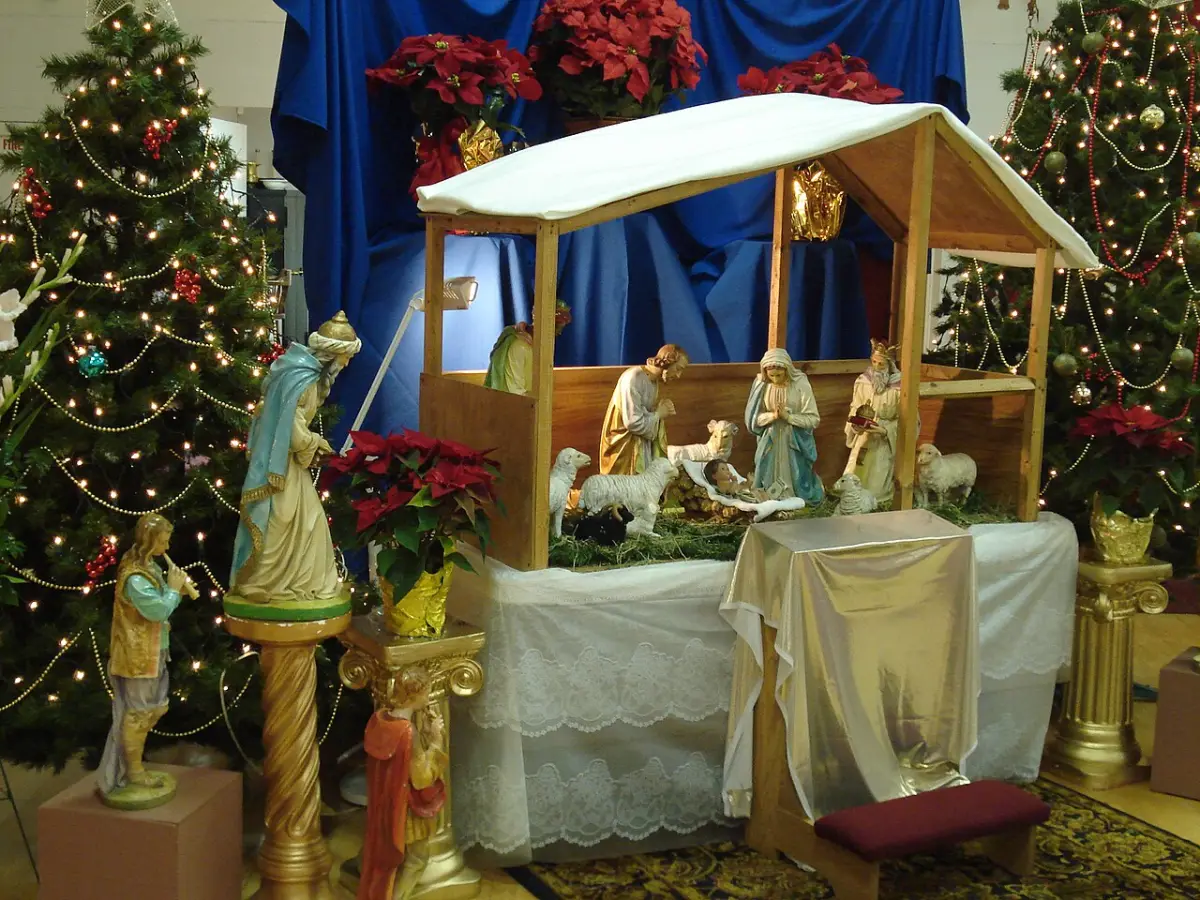
- Christmas (which means “The Mass of Christ”) is a Christian holiday that celebrates the birth of Jesus Christ, who Christians believe is the Son of God. Christmas is also a cultural holiday for many non-Christians all over the world. It is usually celebrated in the month of December, with the main day being Christmas Day on 25 December.
- Christmas Day is celebrated on 25 December. It is an important day, mainly for Christians, along with Easter (which celebrates the death and resurrection of Jesus). The season of Advent begins on a Sunday about four weeks before Christmas. During Advent, people prepare for Christmas. The Christmas season (called Christmastide) ends 6 January, also called the Twelfth Day of Christmas. On this day, Christians celebrate Epiphany. Many Christians also attend Church on Christmas Day.
- Christmas celebrates the birth of Jesus. There are four different Gospels in the Bible which talk about Jesus’ birth. The Gospel of Luke gives details about Jesus’ birth. The Gospel of Matthew tells another part of the story. The Gospel of John says that Jesus came from God to bring his “Word” (his message) to all people. Christians believe these Gospels are based on fact.
- The Gospels say that many years before Jesus’ birth, prophets had told a promise to the Jewish people that God would send them a Messiah, or holy teacher. Christians believe that the promised Messiah was Jesus. His mother was a young woman called Mary, who was engaged, but not yet married to a carpenter called Joseph. Joseph found out that Mary was pregnant and was upset. He was wondering what he should do, when an angel came from God to tell him that the baby was the Holy One. The angel said that he must name the baby. This was a sign that he would take care of it like his own child.
Words to know
- cultural B1
- connected with the customs and traditions of a society — kulturell, Kultur- — cultural — culturel — culturale — kulturowy — cultural — культурный — kültürel — культурний
- resurrection
- coming back to life after death — Auferstehung, Wiederauferstehung — resurrección — résurrection — resurrezione — zmartwychwstanie, wskrzeszenie — ressurreição — воскресение, воскрешение — diriliş — воскрешення
- attend B1
- go to an event or a place — besuchen, teilnehmen — acudir — être présent, assister, aller — partecipare — brać udział — assistir, participar de, comparecer — ходить, присутствовать, посещать — katılmak — бути присутнім
- prophet C1
- people believed to bring messages from God — Prophet, Prophetin, Weissager — profeta, profetisa — prophète, prophétesse, devin — profeta, vate, divinatore — prorok, prorokini — profeta, profetisa, vidente — пророк, пророчица, прорицатель — peygamber — пророк, пророчиця
- promise A2
- words saying that something will surely happen — Versprechen — promesa — promesse — promessa — obietnica — promessa — обещание, посул — söz, vaat — обіцянка
- holy B1
- connected with God or religion — heilig — santo, sagrado, sacro — saint, sacré — sacro, santo — święty — sagrado, santo, sacro — святой, священный — kutsal — святий, священний
- engaged B1
- having agreed to marry someone — verlobt — prometido, comprometido — fiancée, fiancé — fidanzata, fidanzato — narzeczona, narzeczony — noivo — помолвленный, обручённый, помолвленная — sözlü
- carpenter C1
- a person whose job is making things from wood — Zimmerer, Zimmermann, Tischler — carpintero, carpintera, ebanista — charpentier, menuisier — falegname, carpentiere — stolarz, stolarka, cieśla — carpinteiro, carpinteira, marceneiro — плотник, столяр — marangoz — тесляр, тесля, столар
- pregnant B1
- having a baby growing inside her body — schwanger, trächtig — embarazado, preñado — enceint, en gestation — incinto — w ciąży — grávido — беременный — hamile, gebe — вагітний
Text: Simple English Wikipedia, “Christmas”, Wikipedia contributors, https://simple.wikipedia.org/wiki/Christmas · CC BY-SA 4.0 (https://creativecommons.org/licenses/by-sa/4.0/) · shortened · Picture: Steve Burke from Albuquerque, NM, USA, CC BY 2.0 (https://creativecommons.org/licenses/by/2.0/), https://commons.wikimedia.org/wiki/File:Nativity_tree.jpg · Translations: English Wiktionary contributors, CC BY-SA 4.0 (https://creativecommons.org/licenses/by-sa/4.0/) · Worksheet: https://krumeto.com/read/christmas
A. Choose the right answer
- On which date does the Christmas season (Christmastide) end? B1
- a) 12 December
- b) 25 December
- c) 1 January
- d) 6 January
- What do people do during Advent? B1
- a) They celebrate the death and resurrection of Jesus.
- b) They go to church only on Sundays.
- c) They prepare for Christmas.
- d) They celebrate Epiphany.
- Which Gospel gives details about Jesus' birth, according to the text? B1
- a) The Gospel of John
- b) The Gospel of Mark
- c) The Gospel of Luke
- d) The Gospel of Peter
- What had the prophets promised the Jewish people? B1
- a) That Jesus would be born on 25 December
- b) That Mary would marry Joseph
- c) That God would send them a Messiah
- d) That an angel would visit Joseph
- What was Joseph's job? B1
- a) He was a carpenter.
- b) He was a priest.
- c) He was a teacher.
- d) He was a prophet.
- Why was Joseph upset? B2
- a) Mary was pregnant before they were married.
- b) The prophets said the baby was not his.
- c) An angel told him to name the baby.
- d) Mary did not want to marry a carpenter.
- In paragraph 4, the angel tells Joseph to "name the baby". What did this show? B1
- a) He would take care of the child like his own.
- b) He would leave Mary.
- c) He would send the baby to the prophets.
- d) He would become a holy teacher.
B. Answer in full sentences
- How is Christmas, or another big winter holiday, celebrated in your family or country?
- The text says Christmas is also a cultural holiday for many non-Christians. Why do you think people who are not religious celebrate it?
Answer key
- d) 6 January — Paragraph 2 says Christmastide ends on 6 January, the Twelfth Day of Christmas.
- c) They prepare for Christmas. — Paragraph 2 says that during Advent people prepare for Christmas.
- c) The Gospel of Luke — Paragraph 3 says the Gospel of Luke gives details about Jesus' birth.
- c) That God would send them a Messiah — Paragraph 4 says the prophets told a promise that God would send a Messiah.
- a) He was a carpenter. — Paragraph 4 says Mary was engaged to a carpenter called Joseph.
- a) Mary was pregnant before they were married. — Paragraph 4: Mary was engaged but not yet married, and Joseph found out she was pregnant.
- a) He would take care of the child like his own. — The last sentence of paragraph 4 says it was a sign he would take care of the child like his own.
Text: Simple English Wikipedia, “Christmas”, Wikipedia contributors, https://simple.wikipedia.org/wiki/Christmas · CC BY-SA 4.0 (https://creativecommons.org/licenses/by-sa/4.0/) · shortened · Picture: Steve Burke from Albuquerque, NM, USA, CC BY 2.0 (https://creativecommons.org/licenses/by/2.0/), https://commons.wikimedia.org/wiki/File:Nativity_tree.jpg · Translations: English Wiktionary contributors, CC BY-SA 4.0 (https://creativecommons.org/licenses/by-sa/4.0/) · Worksheet: https://krumeto.com/read/christmas