Study: floods, droughts more intense in past 20 years due to higher global temperatures
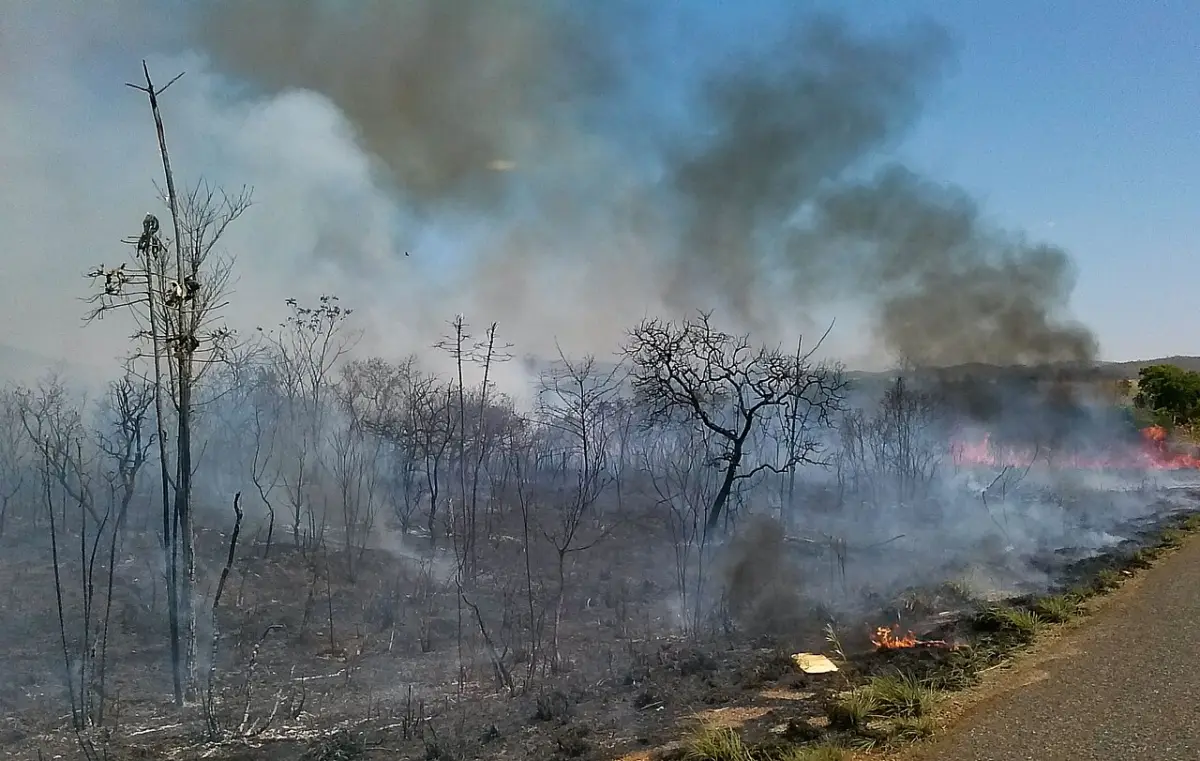
- On Monday, Nature Water published a study by two NASA Goddard Space Flight Center scientists concluding the "strong" link between the global mean surface temperature and water-related extreme weather led the increase in the severity of events like floods and droughts in the past two decades.
- Authors Matthew Rodell and Bailing Li wrote results suggest "rising temperatures may be driving an increase in the total intensity and related metrics of hydroclimatic extreme events that cannot be attributed to the sporadic occurrence of" regular climactic variations, such as the El Niño–Southern Oscillation.
- They identified 1,066 regions that experienced periods of too much, or not enough rainfall from 2002 to 2021 with a new algorithm using observations from the Gravity Recovery and Climate Experiment (GRACE) and GRACE Follow-On (GRACE-FO) satellites.
- This classified 505 'wet' clusters and 561 'dry' clusters, with an increasing severity of events in the seven years since 2015, which were recognized as among the warmest in history. From 2015 to 2021, the number of 'most extreme' events, among the 30 wettest or driest, increased to four from three per year.
- Monday's study noted an increase in the wet-to-dry event ratio from 15° S to 20° N, and a decrease in three areas between 15° N and 50° N, supporting the hypothesis that wet and dry areas are inversely affected by extreme events.
- The most intense dry event observed was a record-breaking South American drought from 2015-2016, while the greatest pluvial had been ongoing since 2002 through 2021, affecting most of sub-Saharan Africa above 10° S and leading to flooding and Lake Victoria to rise to its highest levels ever in 2020, inundating homes and infrastructure.
- Rodell, the lead author, told the Associated Press (AP): "I was surprised to see how well correlated the global intensity was with global mean temperatures."
- Speaking to CNN, he explained: "We thought, well, maybe this is related to global warming, because we do know the past seven or so years have been the hottest on record [...] Sure enough, there was a significant correlation between this total worldwide intensity of these events and the temperature record."
- About the study's reliability, he said: "What I feel more confident about is that as the world warms, we’re going to see the greater global intensity of all the wet and dry events increase, meaning they’re going to be more frequent, larger and more severe in total [...] What happens in a regional sense is a little bit more difficult to say with certainty.
- "The study is another way for people to recognize that climate change affects everyone [...] It’s not just about the temperature rising on average around the world, it’s the actual weather events that have severe impacts on people that may be increasing in intensity and frequency."
Words to know
- severity
- how serious or bad something is — Stärke, Härte, Gewichtung — severidad — sévérité — severità — gravidade — строгость, суровость — şiddet, ciddiyet
- drought B2
- long periods with little or no rain — Dürre, Trockenheit, Trockenzeit — sequía — sécheresse — siccità — susza — seca — засуха, сушь, засушливость — kuraklık — посуха, засуха, суша
- intensity
- how strong something is — Intensität — intensidad, intensión — intensité — intensità — intensidade — интенсивность — yoğunluk
- sporadic
- happening only sometimes, not regularly — esporádico — спорадический — спорадичний
- algorithm
- a set of steps a computer follows to solve a problem — Algorithmus — algoritmo — algorithme — algoritmo — algorytm — algoritmo — алгоритм — algoritma — алгоритм
- cluster
- groups of similar things close together — Schwarm, Anhäufung — piña, racimo, aglomeración — groupe, grappe, amas — gruppo, grappolo — grono — aglomerado, conjunto, aglomeração — скопление, рой, пучок — salkım — пучок, в'язка, жмут
- hypothesis C2
- an idea that has not yet been proved — Hypothese — hipótesis, hipótesi — hypothèse — ipotesi — hipoteza, przypuszczenie — hipótese — гипотеза, предположение — hipotez, varsayım — гіпотеза, припущення, засновок
- inversely
- in the opposite way — umgekehrt — inversamente — inversement
- inundate
- flooding; covering with water — überfluten — inundar — inonder — inondare — zalać — inundar — заливать, залить, затоплять — su basmak — затопити
- correlation C2
- a connection between two things that change together — Korrelation, Zusammenhang — correlación — corrélation — correlazione — korelacja — correlação — взаимосвязь, корреляция, взаимозависимость — korelasyon — кореляція
Text: Wikinews, “Study: floods, droughts more intense in past 20 years due to higher global temperatures”, https://en.wikinews.org/wiki/Study:_floods,_droughts_more_intense_in_past_20_years_due_to_higher_global_temperatures · CC BY 2.5 (https://creativecommons.org/licenses/by/2.5/) · shortened · Picture: José Cruz/ABr, CC BY 3.0 BR (https://creativecommons.org/licenses/by/3.0/br/), https://commons.wikimedia.org/wiki/File:Seca_e_queimada_no_cerrado_01.jpg · Translations: English Wiktionary contributors, CC BY-SA 4.0 (https://creativecommons.org/licenses/by-sa/4.0/) · Worksheet: https://krumeto.com/read/floods-and-droughts-study
A. Choose the right answer
- Who carried out the study? C1
- a) Two NASA scientists, Matthew Rodell and Bailing Li
- b) Journalists from the Associated Press
- c) A team of researchers at CNN
- d) Scientists working for the GRACE satellite company
- What data did the researchers use? C1
- a) Water levels of Lake Victoria and other lakes
- b) Rain measurements from weather stations worldwide
- c) Reports from people living in flooded areas
- d) Observations from the GRACE and GRACE-FO satellites
- How many 'dry' clusters did the study find? C1
- a) 30
- b) 561
- c) 505
- d) 1,066
- What changed between 2015 and 2021? C1
- a) The number of 'most extreme' events fell from four to three per year.
- b) Wet events stopped in sub-Saharan Africa.
- c) The satellites stopped sending data.
- d) The number of 'most extreme' events rose from three to four per year.
- What does the study say about natural patterns such as El Niño? C2
- a) They cannot explain the increase on their own.
- b) They caused most of the extreme events.
- c) They only affect wet areas.
- d) They became more frequent after 2015.
- What was the most intense dry event observed? C1
- a) A drought in sub-Saharan Africa from 2002 to 2021
- b) A drought around Lake Victoria in 2020
- c) A drought between 15° N and 50° N
- d) A drought in South America in 2015–2016
- What is Rodell LESS certain about? C2
- a) That recent years were the hottest on record
- b) That intensity is linked to global temperature
- c) What will happen in particular regions
- d) That global intensity will increase as the world warms
- In paragraph 6, Lake Victoria rose, "inundating homes and infrastructure". This means the water… C1
- a) was used to rebuild the homes
- b) slowly dried out the homes
- c) moved people into new homes
- d) covered homes and roads with floods
B. Answer in full sentences
- Has your region had more extreme weather in recent years? Describe it and how people reacted.
- Rodell says climate change "affects everyone". Write an opinion paragraph: what should individuals and governments do?
Answer key
- a) Two NASA scientists, Matthew Rodell and Bailing Li — Paragraphs 1 and 2 name two NASA Goddard scientists, Matthew Rodell and Bailing Li.
- d) Observations from the GRACE and GRACE-FO satellites — Paragraph 3 says the algorithm used observations from the GRACE and GRACE-FO satellites.
- b) 561 — Paragraph 4 says it classified 505 'wet' clusters and 561 'dry' clusters.
- d) The number of 'most extreme' events rose from three to four per year. — Paragraph 4 says the 'most extreme' events increased to four from three per year.
- a) They cannot explain the increase on their own. — Paragraph 2 says the increase cannot be attributed to the sporadic occurrence of regular variations such as El Niño.
- d) A drought in South America in 2015–2016 — Paragraph 6 names a record-breaking South American drought from 2015–2016; the African event was a wet one.
- c) What will happen in particular regions — Paragraph 9 says what happens in a regional sense is more difficult to say with certainty.
- d) covered homes and roads with floods — Paragraph 6 describes flooding and record lake levels, so inundating means covering with water.
Text: Wikinews, “Study: floods, droughts more intense in past 20 years due to higher global temperatures”, https://en.wikinews.org/wiki/Study:_floods,_droughts_more_intense_in_past_20_years_due_to_higher_global_temperatures · CC BY 2.5 (https://creativecommons.org/licenses/by/2.5/) · shortened · Picture: José Cruz/ABr, CC BY 3.0 BR (https://creativecommons.org/licenses/by/3.0/br/), https://commons.wikimedia.org/wiki/File:Seca_e_queimada_no_cerrado_01.jpg · Translations: English Wiktionary contributors, CC BY-SA 4.0 (https://creativecommons.org/licenses/by-sa/4.0/) · Worksheet: https://krumeto.com/read/floods-and-droughts-study