Hiking
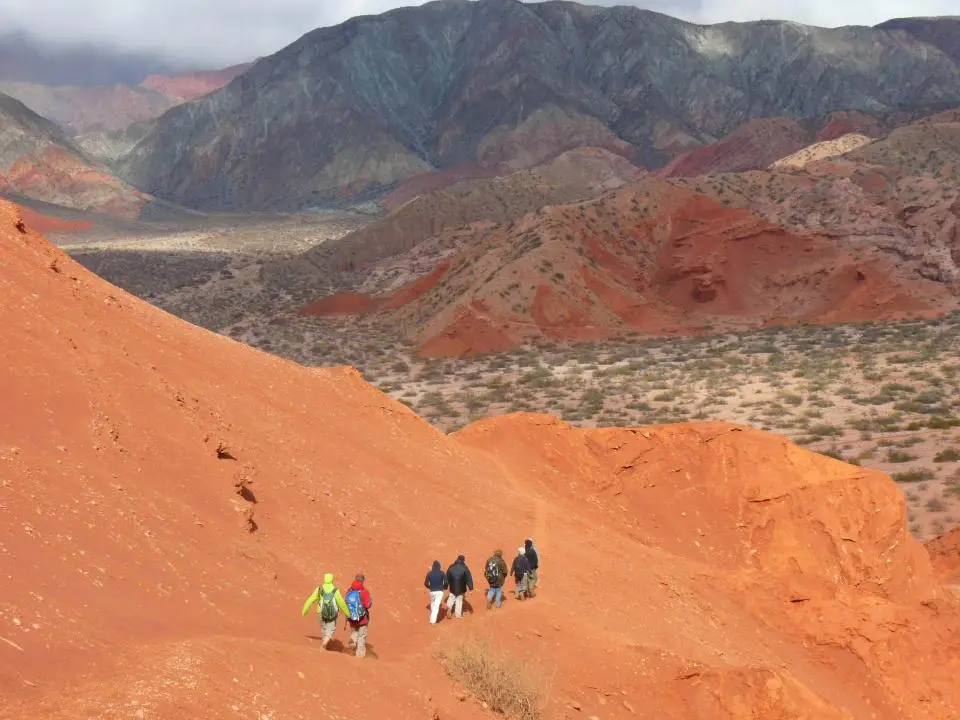
- Hiking is a general word for traveling on foot in wilderness or countryside. Day hikers return before nightfall. Other hikers may go out for many days. Sometimes large groups hike together.
- Hiking is a kind of physical activity as well as a leisure activity (a way of spending free time). Hikers (the people who do hiking) enjoy fresh air and the beauty of nature, and learn about the place. Many hikers enjoy challenging their physical and mental strength. Hiking with friends gives them the chance to become stronger.
- Planning starts with a hiker deciding what he wants from the hike. A traveler should examine the information on landscape, climate, weather, plants, animals, type of ground, and so on. Based on that information, a hiker decides what equipment (tools) he needs. Writing everything on paper is strongly suggested to not forget anything. A hiker should choose the itinerary (the way of the hike).
- Equipping means getting specialized clothing and equipment. Overnight hiking requires carrying more supplies, usually in a backpack, though many use a backpack even for a day hike. Suggestions for equipment can be found in any hiking book. A hiker is suggested to learn more than one source and work. Equipping sometimes needs getting skills in using the apparatus. Basic skills–different ways of orientation (the ability to find the way, for example)–must be developed before hiking.
Words to know
- wilderness B2
- wild natural land where few people live — Wildnis — selva, jungla, páramo — région sauvage — natura — pustynia — selva, mato, sertão — глушь, дикая природа, целина — kır — цілина
- nightfall
- the time in the evening when it gets dark — Einbruch der Dunkelheit, Einbruch der Nacht, Zwielicht — anochecer — tombée de la nuit — crepuscolo — zmierzch, zmrok — anoitecer, crepúsculo, lusco-fusco — наступление ночи, сумерки — akşam karanlığı
- leisure A2
- free time when you are not working — Freizeit, Muße — tiempo libre, ocio — loisir, temps libre — tempo libero, svago — wolny czas, wolne, laba — lazer, tempo livre — свободное время, досуг — вільний час, дозвілля
- challenge A2
- testing their abilities with something difficult — herausfordern — retar — défier — wyzwać — desafiar — вызывать, вызвать — викликати, звати, кликати
- landscape A2
- the way an area of land looks — Landschaft — paisaje — paysage — paesaggio — krajobraz, pejzaż — paisagem — пейзаж, ландшафт — manzara, peyzaj — пейзаж, краєвид, ландшафт
- equipment B1
- the tools and things you need for an activity — Ausrüstung, Ausstattung — equipo, equipamiento — équipement — attrezzatura, apparecchiatura, equipaggiamento — wyposażanie, sprzęt, wyposażenie — equipamento, equipagem — оборудование, снаряжение, экипировка — ekipman, malzeme — обладнання, спорядження
- itinerary C1
- the planned route of a journey — Reiseplan — itinerario — itinéraire — itinerario — plan podróży — itinerário — маршрут, план передвижения — seyahat yolu — маршрут
- supply B1
- food and other things you need to take — Angebot — abasto, oferta — approvisionnement — offerta, approvvigionamento, fornitura — podaż — abastecimento, provisão — предложение, снабжение, поставка — arz, teklif, zahire — забезпечення, постачання, поставка
- backpack B1
- a bag you carry on your back — Rucksack — mochila — sac à dos — zaino — plecak — mochila — рюкзак, ранец — sırt çantası — рюкзак, наплічник, ранець
- orientation
- the ability to know where you are and find the way — orientación — direzione — ориентация, склонность, наклонность — орієнтація
Text: Simple English Wikipedia, “Hiking”, Wikipedia contributors, https://simple.wikipedia.org/wiki/Hiking · CC BY-SA 4.0 (https://creativecommons.org/licenses/by-sa/4.0/) · shortened · Picture: Jlla00, CC BY-SA 3.0 (https://creativecommons.org/licenses/by-sa/3.0/), https://commons.wikimedia.org/wiki/File:Tour_to_the_Quebrada_de_las_Conchas.jpg · Translations: English Wiktionary contributors, CC BY-SA 4.0 (https://creativecommons.org/licenses/by-sa/4.0/) · Worksheet: https://krumeto.com/read/hiking
A. Choose the right answer
- How are day hikers different from other hikers? A2
- a) They come back before it gets dark.
- b) They always walk in large groups.
- c) They never carry a backpack.
- d) They only walk in the countryside.
- According to paragraph 2, what do many hikers enjoy? A2
- a) Testing how strong they are in body and mind
- b) Staying in comfortable hotels in the wilderness
- c) Racing against other hikers to the finish
- d) Walking alone, far away from their friends
- When a hiker plans a hike, what does he do first? A2
- a) Writes everything on paper
- b) Decides what equipment he needs
- c) Chooses the itinerary
- d) Decides what he wants from the hike
- Why does a hiker study information about the weather, plants and type of ground? B1
- a) To find out when nightfall is
- b) To write a hiking book
- c) To decide what equipment to take
- d) To choose friends to hike with
- Why is a backpack more important for overnight hiking? A2
- a) It keeps the hiker warm at night.
- b) The hiker has to carry more supplies.
- c) Hiking books say it is required.
- d) It helps with orientation in the dark.
- In paragraph 3, what does "itinerary" mean? A2
- a) the weather during the hike
- b) the route of the hike
- c) the people on the hike
- d) the equipment for the hike
- Which skill must hikers develop before they go? A2
- a) Ways of finding their way
- b) Writing a hiking book
- c) Repairing their equipment
- d) Cooking over a fire
B. Answer in full sentences
- Plan a one-day hike near your home: where would you go and what would you take? Write a short plan.
- Is it better to hike alone or in a group? Give reasons for your opinion.
Answer key
- a) They come back before it gets dark. — Paragraph 1 says day hikers return before nightfall; paragraph 4 says many use a backpack even for a day hike.
- a) Testing how strong they are in body and mind — Paragraph 2 says many hikers enjoy challenging their physical and mental strength.
- d) Decides what he wants from the hike — Paragraph 3 says planning starts with the hiker deciding what he wants from the hike.
- c) To decide what equipment to take — Paragraph 3 says that based on that information, the hiker decides what equipment he needs.
- b) The hiker has to carry more supplies. — Paragraph 4 says overnight hiking requires carrying more supplies, usually in a backpack.
- b) the route of the hike — Paragraph 3 explains it in brackets: "the way of the hike".
- a) Ways of finding their way — Paragraph 4 says basic skills, such as different ways of orientation, must be developed before hiking.
Text: Simple English Wikipedia, “Hiking”, Wikipedia contributors, https://simple.wikipedia.org/wiki/Hiking · CC BY-SA 4.0 (https://creativecommons.org/licenses/by-sa/4.0/) · shortened · Picture: Jlla00, CC BY-SA 3.0 (https://creativecommons.org/licenses/by-sa/3.0/), https://commons.wikimedia.org/wiki/File:Tour_to_the_Quebrada_de_las_Conchas.jpg · Translations: English Wiktionary contributors, CC BY-SA 4.0 (https://creativecommons.org/licenses/by-sa/4.0/) · Worksheet: https://krumeto.com/read/hiking