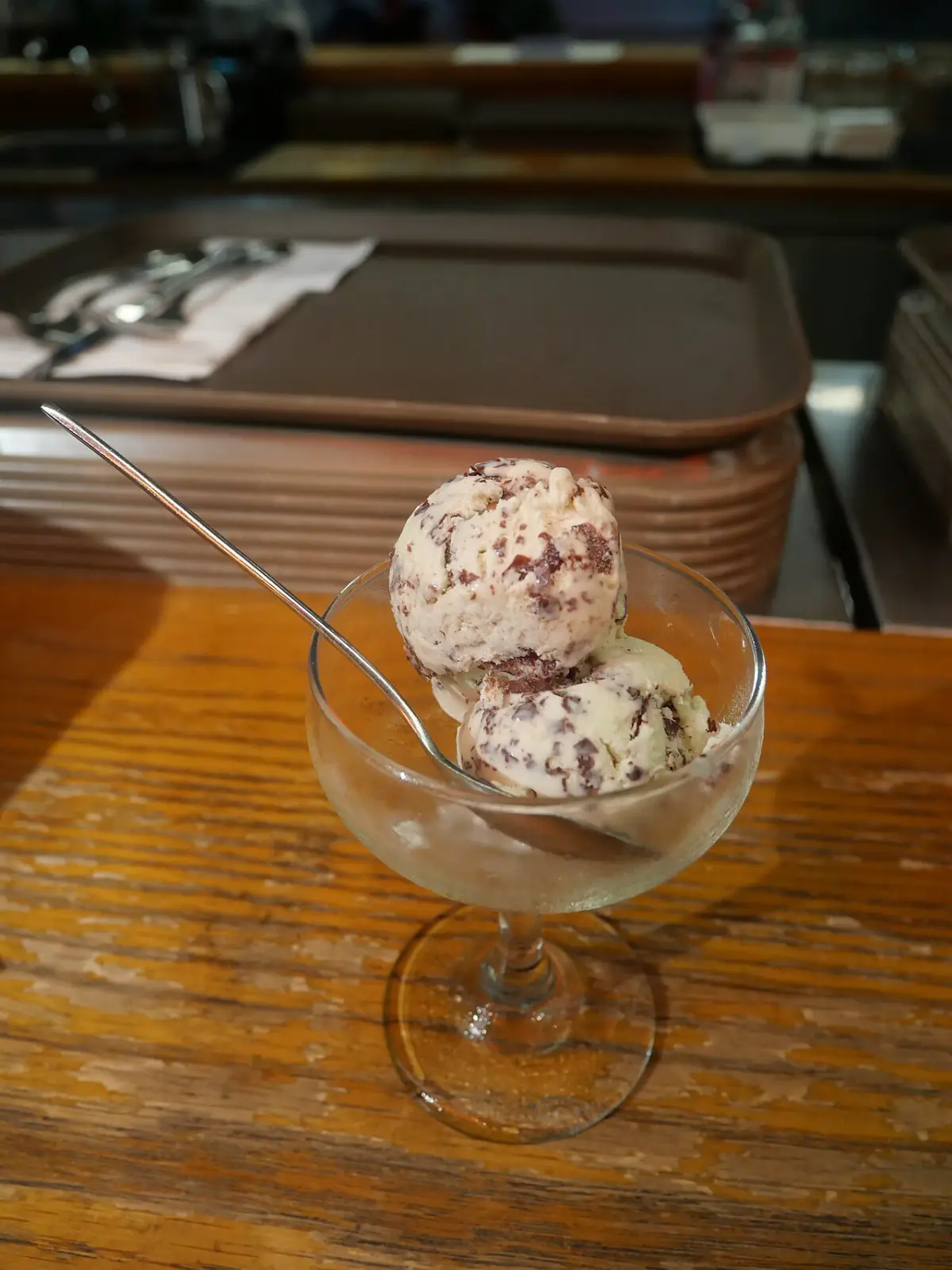
Ice cream is a frozen dessert made from cream and ice, with added flavors and sweeteners. This mixture is quickly frozen while it is stirred continuously in a mixer, so that large ice crystals do not form. Some ice cream is made with carrageenan, a gum found in seaweed so that it is not sticky and easily eatable. Nowadays, ice cream comes with different flavors, shapes, colors and textures. It has a melting point of 0 °C (32 °F).
Ice cream was first eaten as early as 500 BC in Persia. In the Achaemenid Empire, ice cream was made of ice combined with flavorings. Just like modern ice cream, this type of ice cream is eaten during summer. In 400 BC, the Persians invented a special type of ice cream reserved to the royalty during summers. This type of ice cream is made of rose water and vermicelli. The ice in this particular ice cream was mixed with saffron, fruits, and various other flavors.
In 200 BC, the Chinese used a frozen mixture of milk and rice to make ice cream.
A Roman cookbook from the 1st century includes recipes for sweet desserts that are sprinkled with snow.
In the 17th century sorbets and ice creams were made by adding salt to ice, making it freeze.
There are lots of stories about the history of ice cream, but not much real evidence.
Ice cream became very popular in the Mediterranean in the 1800s. Mediterranean people during the 1800s could easily afford ice cream. People started to make lots of recipes for ice cream. Before refrigeration they had to collect ice and store it in ice houses.
From the 1950s onward, ice cream became a lot more popular. Refrigeration was easily affordable because many people owned fridges that could store ice cream for a very long time without melting.
There are lots of ways to make ice cream. Most people don't make ice cream, because it is easier to buy.
Shops make ice cream by mixing cream and other things like milk, sugar, and eggs. Then they add flavoring (something that adds flavor to a food). Then they freeze it.