Olympic Games
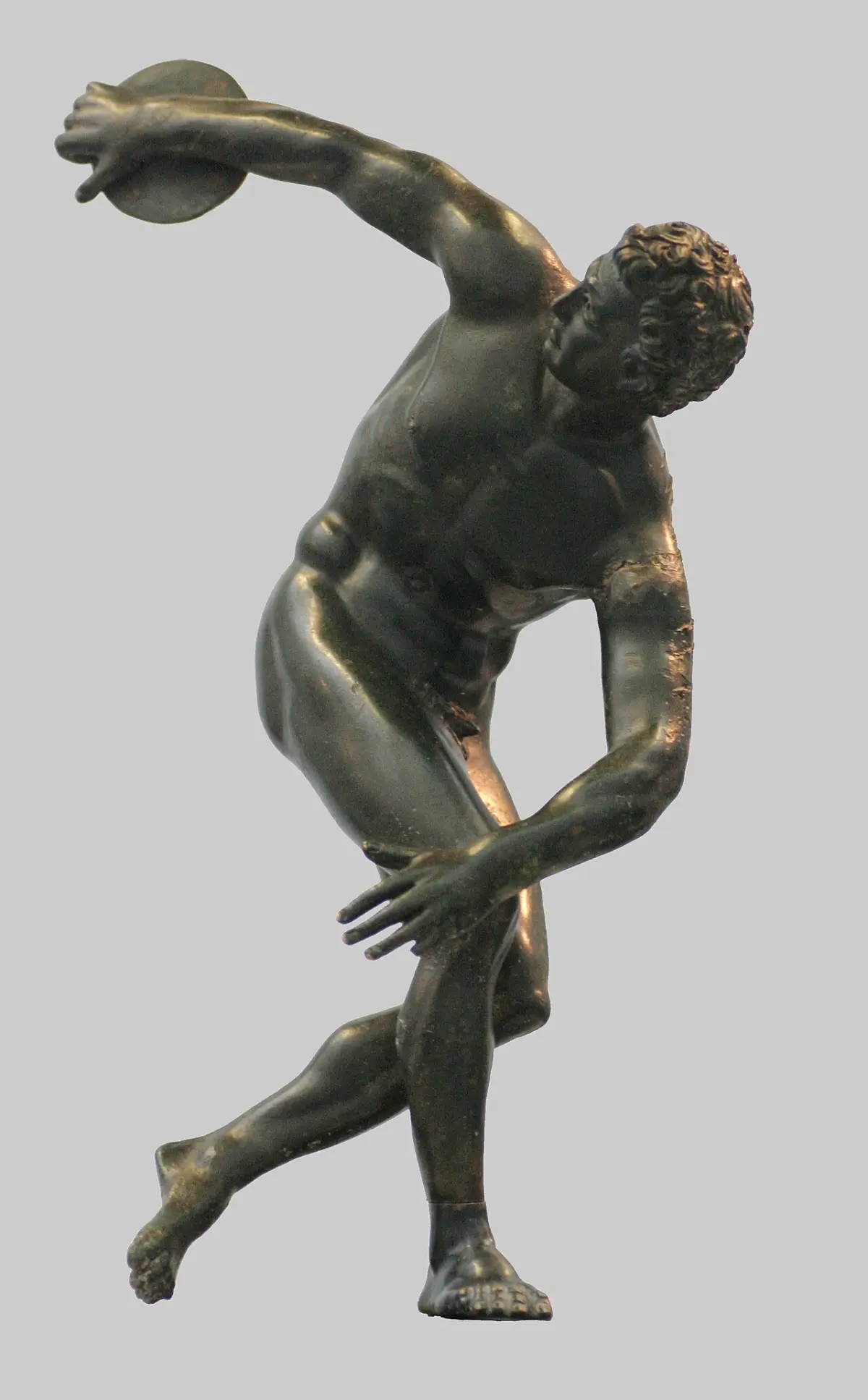
- The Olympic Games (French: Jeux olympiques) is an important international event featuring summer and winter sports. Summer Olympic Games and Winter Olympic Games are held every four years. Originally, the ancient Olympic Games were held in Ancient Greece at Olympia. The first games were in 776 BC. They were held every four years until the 6th century AC. The first "modern" Olympics took place in 1896 in Athens, Greece. Athletes participate in the Olympics Games to represent their countries.
- Over time the Olympics have become bigger. In old times, women were not allowed, but now there are women's events. The Winter Games were created for ice and snow sports. The Paralympic Games were created for athletes with physical disabilities. As well, the Olympics became bigger with the addition of the Youth Olympic Games for teenage athletes. World War I and World War II led to the cancellation of the 1916, 1940, and 1944 Games. As the decision-making body, the International Olympic Committee (IOC) is responsible for choosing the host city for each Olympic Games. The IOC is also responsible for choosing what sports are in the games. The creator of modern Olympics is Baron Pierre de Coubertin.
- The celebration of the Games includes many rituals and symbols, such as Olympic flag and torch, as well as the opening and closing ceremonies. The first, second, and third-place finishers in each event receive, respectively, gold, silver, and bronze medals.
Words to know
- feature A2
- including as an important part — bieten — contar con, disponer de — privilegiare — priorizar — подчёркивать, подчеркнуть — özellik taşımak — підкреслювати, підкреслити, акцентувати
- originally B2
- at the beginning; at first — ursprünglich — originalmente, originariamente — à l'origine, au départ — in origine, originariamente — pierwotnie, oryginalnie — изначально, первоначально, вначале — спочатку, спершу, оригінально
- ancient A2
- from a very long time ago — uralt — antiguo, anciano — ancien, antique — antico — starożytny, antyczny — antigo — древний, старинный, старый — antik, antika — стародавній, старий, древній
- participate B1
- take part — teilnehmen, sich beteiligen — participar — participer, prendre part — partecipare — wziąć udział, uczestniczyć, brać udział — participar — принимать участие, принять участие, участвовать — katılmak — взяти участь, брати участь
- represent A2
- act or compete for a country or group — vertreten, repräsentieren — representar — représenter — rappresentare — reprezentować — representar — представлять — представляти
- disability B1
- conditions that make some activities difficult
- cancellation
- a decision that a planned event will not happen — Absage, Stornierung, Aufhebung — cancelación, anulación — annulation — cancellazione — cancelamento, anulação — отмена, отказ, расторжение
- host A2
- the city where an event takes place — Moderator, Showmaster — moderatore — anfitrião, apresentador — ведущий, ведущая, церемониймейстер — ведучий, ведуча
- ritual B2
- actions always done the same way at ceremonies — Ritual — ritual — rituel — rituale — rytuał, obrzęd, obrządek — ritual, rito — ритуал, обряд — ayin, ritüel, merasim — ритуал, обряд
- respectively
- in the same order as the things already mentioned — jeweils — respectivamente, respective — respectivement — rispettivamente — odpowiednio — respectivamente, respetivamente — соответственно, соответствующим образом, в указанном порядке — відповідно
Text: Simple English Wikipedia, “Olympic Games”, Wikipedia contributors, https://simple.wikipedia.org/wiki/Olympic_Games · CC BY-SA 4.0 (https://creativecommons.org/licenses/by-sa/4.0/) · shortened · Picture: Matthias Kabel, CC BY 2.5 (https://creativecommons.org/licenses/by/2.5/), https://commons.wikimedia.org/wiki/File:Roman_bronze_copy_of_Myron%E2%80%99s_Discobolos,_2nd_century_CE_(Glyptothek_Munich).jpg · Translations: English Wiktionary contributors, CC BY-SA 4.0 (https://creativecommons.org/licenses/by-sa/4.0/) · Worksheet: https://krumeto.com/read/olympic-games
A. Choose the right answer
- Where were the ancient Olympic Games held? A2
- a) In Athens, the Greek capital
- b) In Rome, in the Roman Empire
- c) In Sparta in Ancient Greece
- d) At Olympia in Ancient Greece
- When did the first modern Olympics take place? A2
- a) In 1916
- b) In 776 BC
- c) In 1896
- d) In 1924
- Why were the 1916, 1940 and 1944 Games cancelled? A2
- a) Because women were not allowed to take part
- b) Because the IOC could not choose a host city
- c) Because there were not enough athletes
- d) Because of the two World Wars
- Who are the Paralympic Games for? A2
- a) Athletes who are over forty years old
- b) Teenage athletes from every country
- c) Athletes in ice and snow sports
- d) Athletes with physical disabilities
- Which of these is the IOC responsible for? A2
- a) Creating the ancient Games
- b) Training athletes for their countries
- c) Choosing the host city
- d) Making the medals
- In paragraph 3, finishers receive gold, silver and bronze medals "respectively". This means… A2
- a) first place gets gold, second silver, third bronze
- b) the medals are given in a random order
- c) each of the three finishers chooses a medal
- d) all three finishers get all three medals
- Which change to the Olympics does the text describe? B1
- a) They are now held every single year.
- b) They now include women's events.
- c) They no longer have opening ceremonies.
- d) They now take place only in Greece.
B. Answer in full sentences
- Should a city want to host the Olympic Games? Discuss the advantages and disadvantages.
- Which new sport would you add to the Olympics, and why?
Answer key
- d) At Olympia in Ancient Greece — Paragraph 1 says the ancient Games were held in Ancient Greece at Olympia; Athens hosted the first modern Games.
- c) In 1896 — Paragraph 1 says the first modern Olympics took place in 1896 in Athens.
- d) Because of the two World Wars — Paragraph 2 says World War I and World War II led to their cancellation.
- d) Athletes with physical disabilities — Paragraph 2 says the Paralympic Games were created for athletes with physical disabilities.
- c) Choosing the host city — Paragraph 2 says the IOC is responsible for choosing the host city and the sports.
- a) first place gets gold, second silver, third bronze — Paragraph 3 lists first, second and third, then gold, silver and bronze in the same order.
- b) They now include women's events. — Paragraph 2 says women were not allowed in old times but now there are women's events.
Text: Simple English Wikipedia, “Olympic Games”, Wikipedia contributors, https://simple.wikipedia.org/wiki/Olympic_Games · CC BY-SA 4.0 (https://creativecommons.org/licenses/by-sa/4.0/) · shortened · Picture: Matthias Kabel, CC BY 2.5 (https://creativecommons.org/licenses/by/2.5/), https://commons.wikimedia.org/wiki/File:Roman_bronze_copy_of_Myron%E2%80%99s_Discobolos,_2nd_century_CE_(Glyptothek_Munich).jpg · Translations: English Wiktionary contributors, CC BY-SA 4.0 (https://creativecommons.org/licenses/by-sa/4.0/) · Worksheet: https://krumeto.com/read/olympic-games