Placebo
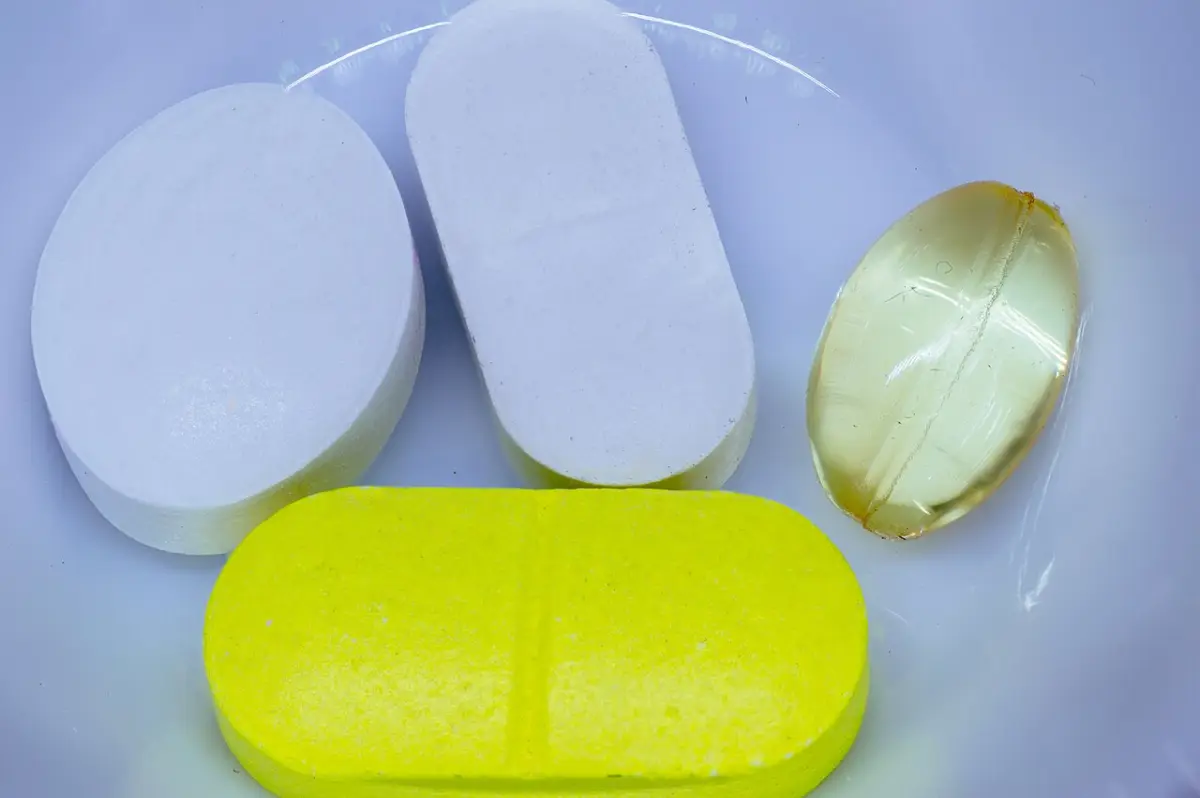
- A placebo (pluh-SEE-boh) is a medicine or treatment intended to appear genuine to its recipient, but which has no pharmaceutical effect. Common placebos include inert tablets (like sugar pills), inert injections (like saline), sham surgery, and other procedures.
- Placebos are used in randomized clinical trials to test the efficacy of medical treatments. In a placebo-controlled trial, any change in the control group is known as the placebo response, and the difference between this and the result of no treatment is the placebo effect. Placebos in clinical trials should ideally be indistinguishable from so-called verum treatments under investigation, except for the latter's particular hypothesized medicinal effect. This is to shield test participants (with their consent) from knowing who is getting the placebo and who is getting the treatment under test, as patients' and clinicians' expectations of efficacy can influence results.
- The idea of a "placebo effect" was discussed in 18th century psychology, but became more prominent in the 20th century. Modern studies find that placebos can affect some outcomes such as pain and nausea, but otherwise do not generally have important clinical effects. Improvements that patients experience after being treated with a placebo can also be due to unrelated factors, such as regression to the mean (a statistical effect where an unusually high or low measurement is likely to be followed by a less extreme one). The use of placebos in clinical medicine raises ethical concerns, especially if they are disguised as an active treatment, as this introduces dishonesty into the doctor–patient relationship and bypasses informed consent.
- Placebos are also popular because they can sometimes produce relief through psychological mechanisms (a phenomenon known as the "placebo effect"). They can affect how patients perceive their condition and encourage the body's chemical processes for relieving pain and a few other symptoms, but have no impact on the disease itself.
- The Latin term placebo means [I] shall be pleasing.
- The definition of placebo has been debated. One definition states that a treatment process is a placebo when none of the characteristic treatment factors are effective (remedial or harmful) in the patient for a given disease.
Words to know
- genuine B2
- real; what it seems to be — echt, original — auténtico, genuino, verdadero — authentique — genuino — autentyczny, prawdziwy — genuíno, autêntico, legítimo — настоящий, подлинный, истинный — gerçek, hakiki, orijinal — справжній
- pharmaceutical
- relating to medical drugs — Arzneimittel — farmacéutico — pharmaceutique — farmaceutico — farmaceutyczny — farmacêutico — фармацевтический — фармацевтичний
- inert B2
- having no chemical or medical effect — träge — inerte — bloqué, coincé — inerte — bezwładny — inerte — застрявший — uyuz — застряглий
- sham
- fake, but made to look real — falsch, Schein- — falso, ficticio, fingido — fasullo — udawany — фальшивый, фиктивный — фальшивий, фіктивний
- randomize
- with people put into groups by chance
- efficacy
- the ability to produce the intended result — Wirksamkeit, Wirkungsfähigkeit — eficacia — efficacité — efficacia — skuteczność, efektywność — eficácia — эффективность, действенность — ефективність, дієвість
- indistinguishable
- impossible to tell apart — indistinguible — indistinguable — nieodróżnialny — indistinguível — неразличимый
- consent B2
- permission or agreement — Zustimmung, Einverständnis, Konsens — consentimiento, venia, anuencia — consentement, approbation, agrément — consenso — pozwolenie, zgoda — consentimento — согласие, разрешение, дозволение — onay, rıza — згода
- disguise B2
- made to look like something else — verkleiden — disfrazar — déguiser — camuffarsi, travestirsi — disfarçar — маскироваться, замаскироваться — kılık değiştirmek
- bypass C1
- avoids; goes around — umgehen, ausweichen — baipasear, bypasear, puentear — contourner, passer outre — evitare, aggirare, bypassare — contornar
Text: English Wikipedia, “Placebo”, Wikipedia contributors, https://en.wikipedia.org/wiki/Placebo · CC BY-SA 4.0 (https://creativecommons.org/licenses/by-sa/4.0/) · shortened · Picture: Subhrajyoti07, CC BY-SA 4.0 (https://creativecommons.org/licenses/by-sa/4.0/), https://commons.wikimedia.org/wiki/File:A_collection_of_generic_medicine_pills_on_a_white_background.jpg · Translations: English Wiktionary contributors, CC BY-SA 4.0 (https://creativecommons.org/licenses/by-sa/4.0/) · Worksheet: https://krumeto.com/read/placebo
A. Choose the right answer
- Which of these is given as an example of a placebo? C1
- a) Informed consent
- b) Sham surgery
- c) A verum treatment
- d) Regression to the mean
- In a placebo-controlled trial, what is the "placebo effect"? C1
- a) Patients finding out which of them got the placebo
- b) The effect of the real treatment being tested
- c) The placebo response minus the result of no treatment
- d) Any change at all that is seen in the control group
- Why should a placebo look exactly like the real treatment in a trial? C2
- a) So that doctors can save money on medicine
- b) So that expectations cannot influence the results
- c) So that patients do not need to give consent
- d) So that the placebo has the same pharmaceutical effect
- According to modern studies, what can placebos affect? C1
- a) The disease itself
- b) Some outcomes, such as pain and nausea
- c) Nothing at all
- d) Most important clinical outcomes
- What is "regression to the mean"? C1
- a) A patient's condition slowly getting worse over time
- b) A doctor's expectations changing the result
- c) A placebo gradually losing its effect over weeks
- d) An extreme measurement followed by a less extreme one
- Why does using placebos in ordinary clinical medicine raise ethical concerns? C2
- a) Placebos always have serious harmful side effects.
- b) Hiding that a treatment is a placebo is dishonest.
- c) Placebos are more expensive than real medicine.
- d) Patients in trials never agree to receive them.
- What does the Latin word "placebo" mean? C1
- a) I shall be pleasing
- b) It shall seem real
- c) Sugar pill
- d) I shall be healed
B. Answer in full sentences
- Is it ever acceptable for a doctor to give a patient a placebo without telling them? Argue your position.
- Describe a time when you felt better simply because you expected to. What might explain it?
Answer key
- b) Sham surgery — Paragraph 1 lists inert tablets, inert injections and sham surgery.
- c) The placebo response minus the result of no treatment — Paragraph 2 calls any change in the control group the placebo response, and the difference from no treatment the placebo effect.
- b) So that expectations cannot influence the results — Paragraph 2 says this shields participants from knowing who gets the placebo, because expectations can influence results.
- b) Some outcomes, such as pain and nausea — Paragraph 3 mentions pain and nausea; paragraph 4 says placebos have no impact on the disease itself.
- d) An extreme measurement followed by a less extreme one — Paragraph 3 defines it in brackets as a statistical effect.
- b) Hiding that a treatment is a placebo is dishonest. — Paragraph 3 says it introduces dishonesty into the doctor–patient relationship and bypasses informed consent.
- a) I shall be pleasing — Paragraph 5 gives the meaning "[I] shall be pleasing".
Text: English Wikipedia, “Placebo”, Wikipedia contributors, https://en.wikipedia.org/wiki/Placebo · CC BY-SA 4.0 (https://creativecommons.org/licenses/by-sa/4.0/) · shortened · Picture: Subhrajyoti07, CC BY-SA 4.0 (https://creativecommons.org/licenses/by-sa/4.0/), https://commons.wikimedia.org/wiki/File:A_collection_of_generic_medicine_pills_on_a_white_background.jpg · Translations: English Wiktionary contributors, CC BY-SA 4.0 (https://creativecommons.org/licenses/by-sa/4.0/) · Worksheet: https://krumeto.com/read/placebo