Renaissance
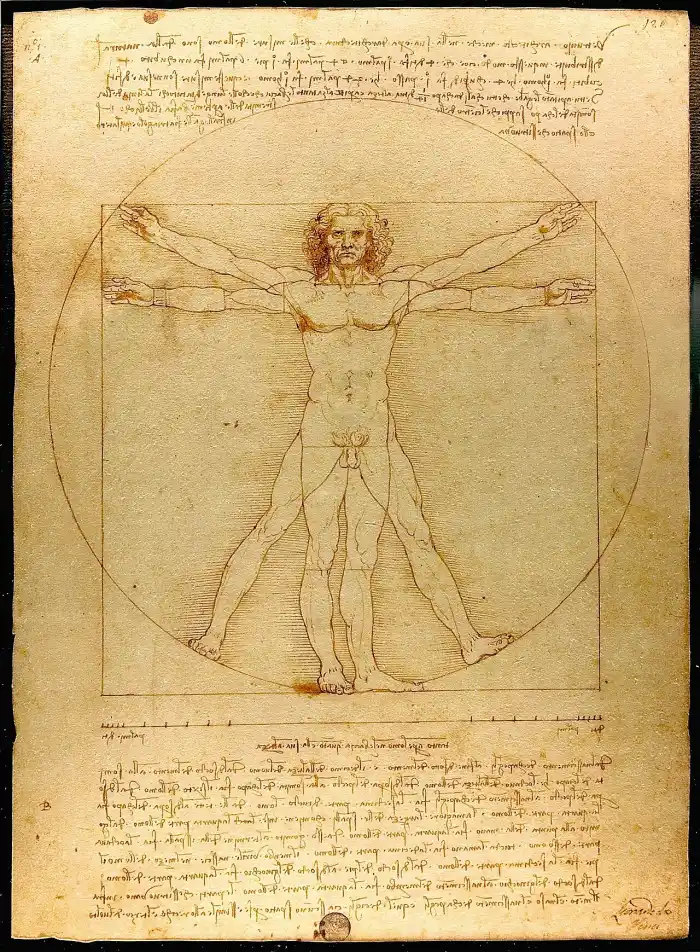
- The Renaissance (UK: rin-AY-sənss, US: REN-ə-sahnss, "rebirth") was a European period of history and cultural movement taking place at the end of the Late Middle Ages and the beginning of the early modern era. It is variously defined as covering the 15th and 16th centuries or, more broadly, as lasting from the 14th century to the 17th. It was characterized by the European rediscovery and revival of the literary, philosophical, and artistic achievements of classical antiquity. Associated with great change in art, architecture, politics, literature, exploration and technology, the Renaissance was first centered in the Republic of Florence, then spread to the rest of Italy and later throughout Europe.
- The Renaissance's intellectual basis was founded in its version of humanism, derived from the concept of Roman humanitas and the rediscovery of classical Greek philosophy, such as that of Protagoras, who said that "man is the measure of all things". Although the invention of metal movable type sped the dissemination of ideas from the later 15th century, the changes of the Renaissance were not uniform across Europe: the first traces appear in Italy as early as the late 13th century, in particular with the writings of Dante and the paintings of Giotto.
- As a cultural movement, the Renaissance encompassed innovative flowering of literary Latin and an explosion of vernacular literatures, beginning with the 14th-century resurgence of learning based on classical sources, which contemporaries credited to Petrarch; the development of linear perspective and other techniques of rendering a more natural reality in painting; and gradual but widespread educational reform. It saw myriad artistic developments and contributions from such polymaths as Leonardo da Vinci and Michelangelo, who inspired the term "Renaissance man". In politics, the Renaissance contributed to the development of the customs and conventions of diplomacy. The period also saw revolutions in printing and navigation, as well as the introduction of modern banking and the field of accounting.
- The Renaissance began in Italy during the crisis of the Late Middle Ages. It had a different period and characteristics north of the Alps and in Spain. In Italy, the period conventionally ends with the waning of humanism, and the advent of the Reformation (1517), the Sack of Rome (1527) or the Counter-Reformation (1545), and in art, the Baroque period. Proponents of a "long Renaissance," however, may propose that (outside of Italy) the period extended into the 17th century.
Words to know
- variously
- in different ways by different people
- revival B2
- a return to use or popularity — Wiederbelebung — reviviscencia — renaissance — risveglio — возрождение, оживление — відродження
- antiquity C1
- ancient times, especially of Greece and Rome — Antike, Altertum — antigüedad — antichità — starożytność — antiguidade — древность, старина — старовина, давнина
- humanism
- thinking that values human achievement and classical learning — Humanismus — humanismo — humanisme — umanesimo — humanizm — humanismo — гуманизм — hümanizm — гуманізм
- dissemination C2
- the spreading of information to many people — Verbreitung — difusión, propagación — dissémination — diffusione, propagazione — disseminação — распространение, рассеивание
- vernacular
- in the everyday language of ordinary people — umgangssprachlich — vernáculo — en langage courant — vernacolare — ludowy, potoczny — vernacular — народный, местный, разговорный — vernaküler — народний
- resurgence
- a return after a period of decline — resurgimiento — résurgence — risorgimento — ożywienie — ressurgimento — возрождение
- polymath
- people who know a lot about many subjects — Universalgelehrter — polímata — homme de la Renaissance — uomo universale, erudito — człowiek renesansu, uczony — polímata — учёный, эрудит, полимат — allame — учений
- wane C2
- gradually becoming weaker — menguante de la Luna — déclin — убывание, спад, упадок — спад
- proponent B2
- people who support an idea — Befürworter, Fürsprecher — defensor — partisan, avocat — zwolennik — защитник, пропонент — прихильник, прихильниця
Text: English Wikipedia, “Renaissance”, Wikipedia contributors, https://en.wikipedia.org/wiki/Renaissance · CC BY-SA 4.0 (https://creativecommons.org/licenses/by-sa/4.0/) · shortened · Picture: Leonardo da Vinci; photo: Luc Viatour / https://Lucnix.be, Public domain (https://creativecommons.org/publicdomain/mark/1.0/), https://commons.wikimedia.org/wiki/File:Da_Vinci_Vitruve_Luc_Viatour.jpg · Translations: English Wiktionary contributors, CC BY-SA 4.0 (https://creativecommons.org/licenses/by-sa/4.0/) · Worksheet: https://krumeto.com/read/renaissance
A. Choose the right answer
- Where was the Renaissance first centred? C1
- a) In the Republic of Florence
- b) North of the Alps, in Germany
- c) In Rome, the old capital
- d) In the Kingdom of Spain
- How is the period of the Renaissance defined? C1
- a) As the late 13th century and nothing more
- b) As exactly the same period as the Baroque
- c) In different ways: 15th–16th or 14th–17th century
- d) Strictly as the years from 1517 to 1545 only
- What does the text say about how the Renaissance spread across Europe? C2
- a) It only happened where there was movable type.
- b) It reached every part of Europe at the same time.
- c) It started in Spain and moved to Italy.
- d) It was uneven, although printing helped ideas spread.
- Whom did contemporaries credit with the 14th-century resurgence of learning? C1
- a) Protagoras
- b) Giotto
- c) Dante
- d) Petrarch
- Which development in painting does the text mention? C1
- a) Painting on canvas outdoors
- b) Abstract art
- c) Oil paint
- d) Linear perspective
- Which change outside the arts does the text connect with the Renaissance? C1
- a) The first universities
- b) The invention of the telescope
- c) The start of the Reformation
- d) Modern banking and accounting
- According to paragraph 4, which event may mark the end of the Renaissance in Italy? C2
- a) The crisis of the Late Middle Ages
- b) The Sack of Rome in 1527
- c) The rediscovery of Greek philosophy
- d) The writings of Dante
- "Proponents of a long Renaissance" are people who… C1
- a) think it ended with the paintings of Giotto
- b) believe the Renaissance never really happened
- c) say it lasted into the 17th century outside Italy
- d) study only the Renaissance in Italy and Florence
B. Answer in full sentences
- Leonardo and Michelangelo inspired the term "Renaissance man". Who could be called a "Renaissance person" today, and why?
- Movable type helped Renaissance ideas spread. Compare its effect with that of the Internet today.
Answer key
- a) In the Republic of Florence — Paragraph 1 says it was first centred in the Republic of Florence, then spread through Italy and Europe.
- c) In different ways: 15th–16th or 14th–17th century — Paragraph 1 says it is variously defined as the 15th–16th centuries or as lasting from the 14th to the 17th.
- d) It was uneven, although printing helped ideas spread. — Paragraph 2 says movable type sped the dissemination of ideas, but the changes were not uniform across Europe.
- d) Petrarch — Paragraph 3 says contemporaries credited the resurgence to Petrarch; Dante and Giotto appear in paragraph 2.
- d) Linear perspective — Paragraph 3 mentions linear perspective and other techniques of rendering a more natural reality.
- d) Modern banking and accounting — Paragraph 3 says the period saw the introduction of modern banking and the field of accounting; paragraph 4 treats the Reformation as a possible end.
- b) The Sack of Rome in 1527 — Paragraph 4 lists the Reformation (1517), the Sack of Rome (1527) or the Counter-Reformation (1545) as possible ends.
- c) say it lasted into the 17th century outside Italy — The last sentence of paragraph 4 says they propose the period extended into the 17th century outside Italy.
Text: English Wikipedia, “Renaissance”, Wikipedia contributors, https://en.wikipedia.org/wiki/Renaissance · CC BY-SA 4.0 (https://creativecommons.org/licenses/by-sa/4.0/) · shortened · Picture: Leonardo da Vinci; photo: Luc Viatour / https://Lucnix.be, Public domain (https://creativecommons.org/publicdomain/mark/1.0/), https://commons.wikimedia.org/wiki/File:Da_Vinci_Vitruve_Luc_Viatour.jpg · Translations: English Wiktionary contributors, CC BY-SA 4.0 (https://creativecommons.org/licenses/by-sa/4.0/) · Worksheet: https://krumeto.com/read/renaissance