Robot
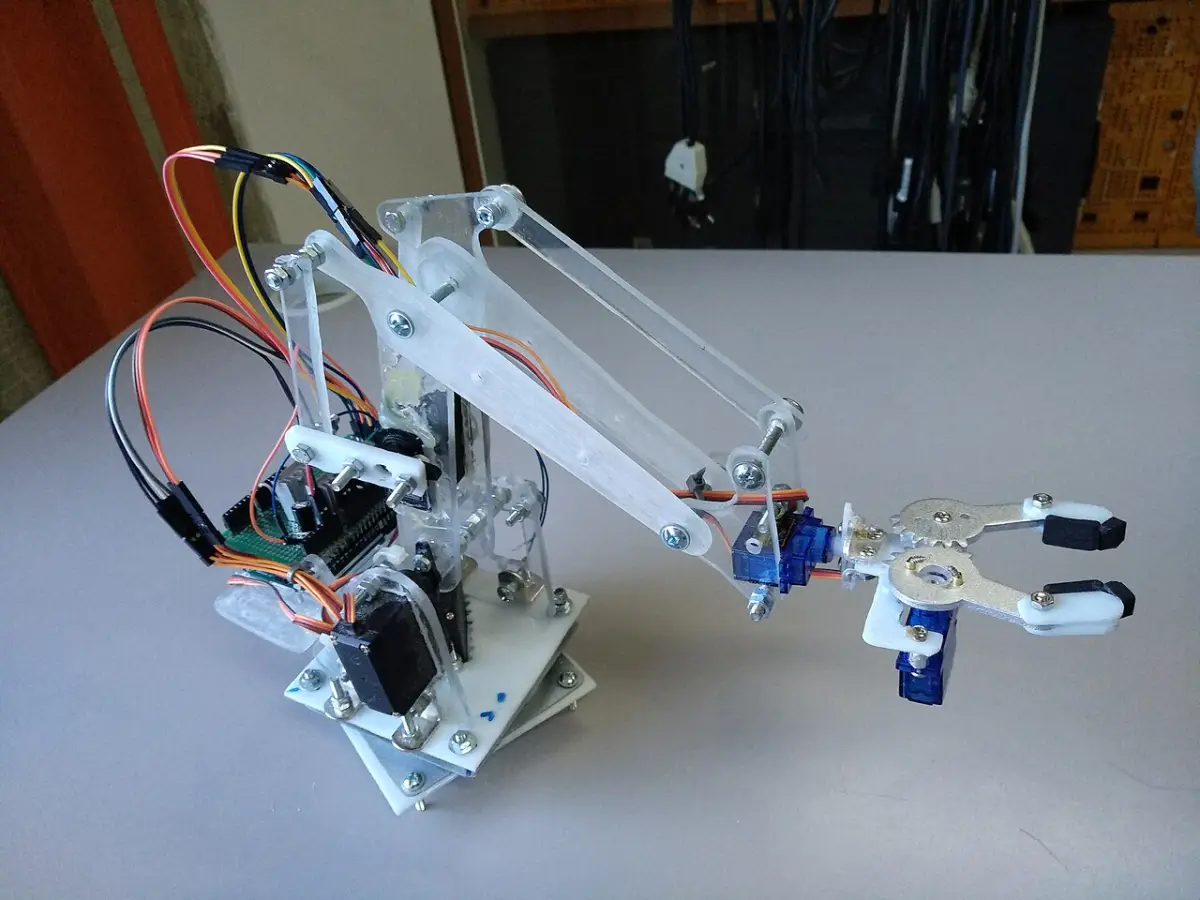
- A robot is a machine that can move and do certain tasks and work.
- Robots are controlled by a computer program or electronic circuitry. They may be directly controlled by humans. They may be designed to look like humans, in which case their behaviour may suggest intelligence or thought but they do not have feelings. Most robots do a specific job, and they do not always look like humans. They can come in many forms.
- In fiction, however, robots usually look like people, and seem to have a life of their own. There are many books, movies, and video games with robots in them. Isaac Asimov's I, Robot is perhaps the most famous.
- People have been interested in building machines that do work for us for a long time. But it takes time and money to build just one machine, so early ideas were not built.
- Leonardo da Vinci designed a man-shaped machine to look like a knight in 1464. It would be controlled with ropes and wheels.
- Other engineers and dreamers drew mechanical men. In 1920, Karel Čapek wrote a story about them, and he used a word from Czech that is connected with 'work': robot.
- The most successful robot designs in the 20th century were not made to look like people. They were designed for use. George Devol made the first of these, the Unimate, in 1954, with one arm and one hand. General Motors bought it in 1960. The next year, it started work in a factory in New Jersey, lifting and stacking pieces of metal that were too hot for people to touch. The engineers could program it, and reprogram it if they had to.
Words to know
- task A2
- pieces of work that must be done — Aufgabe — tarea — tâche — compito — zadanie — tarefa, dever — задание, задача, работа — görev, vazife — завдання, задача
- circuitry B2
- a system of electrical connections in a machine — circuitería — circuiterie — circuiteria
- directly B1
- without anything or anyone in between — direkt, gerade, unmittelbar — directe, directamente, en derechura — directement — direttamente — bezpośrednio, wprost — diretamente — прямо, напрямую, непосредственно — doğrudan, direkt — безпосередньо, прямо, впрост
- intelligence A2
- the ability to think, learn and understand — Intelligenz — inteligencia — intelligence — intelligenza — inteligencja, rozum, rozsądek — inteligência — интеллект, ум, разум — zekâ, akıl, anlayış — інтелект, розум, глузд
- specific A2
- particular; one exact kind — spezifisch — específico — spécifique — specifico — konkretny — específico — специфический, конкретный, явный — конкретний, специфічний, видовий
- fiction A2
- stories about imaginary people and events — Fiktion, Belletristik, Erfindung — ficción — fiction — finzione — fikcja, beletrystyka — ficção — вымысел, выдумка, художественная литература — kurgu — художня література, фікція, вигадка
- knight
- a soldier in armour in the Middle Ages — Ritter — caballero, caballera — chevalier — cavaliere — rycerz — cavaleiro — рыцарь, витязь, богатырь — şövalye — лицар, рицар, богатир
- mechanical B1
- working like a machine, or made of machine parts — mechanisch — mecánico — mécanique — meccanico — mechaniczny — mecânico — механический — механічний
- stack B2
- putting things one on top of another
- reprogram
- give a machine new instructions — reprogramar
Text: Simple English Wikipedia, “Robot”, Wikipedia contributors, https://simple.wikipedia.org/wiki/Robot · CC BY-SA 4.0 (https://creativecommons.org/licenses/by-sa/4.0/) · shortened · Picture: Nicolò Bertuccioli, CC BY-SA 4.0 (https://creativecommons.org/licenses/by-sa/4.0/), https://commons.wikimedia.org/wiki/File:Braccio_robotico_con_Arduino_01.jpg · Translations: English Wiktionary contributors, CC BY-SA 4.0 (https://creativecommons.org/licenses/by-sa/4.0/) · Worksheet: https://krumeto.com/read/robot
A. Choose the right answer
- According to paragraph 2, what do robots NOT have, even when they look like humans? A2
- a) Electronic circuitry
- b) Feelings
- c) Many forms
- d) A computer program
- How are robots in fiction usually different? A2
- a) They look like people and seem to have a life of their own.
- b) They only ever do one specific job in a factory.
- c) They are controlled with ropes and wheels.
- d) They have just one arm and one hand, like the Unimate.
- Why were many early ideas for robots never built? B1
- a) Building one machine took a lot of time and money.
- b) People were not yet interested in such machines.
- c) Nobody knew the word "robot" at that time.
- d) The machines would never have real feelings.
- Where does the word "robot" come from? A2
- a) The name of George Devol's first machine
- b) The name of Leonardo da Vinci's knight
- c) A Czech word connected with work
- d) Isaac Asimov's book I, Robot
- What job did the Unimate do in the factory? A2
- a) It drew designs of mechanical men.
- b) It programmed other machines.
- c) It built cars for General Motors on its own.
- d) It lifted and stacked hot pieces of metal.
- Put these events in order: (a) Čapek writes his story, (b) General Motors buys the Unimate, (c) Devol makes the Unimate. A2
- a) c – b – a
- b) a – c – b
- c) a – b – c
- d) c – a – b
- How were the most successful robots of the 20th century different from robots in fiction? B1
- a) They were controlled with ropes and wheels.
- b) They were designed by famous writers of fiction.
- c) They were built to be useful, not to look like people.
- d) They had feelings and could think for themselves.
B. Answer in full sentences
- Which job would you like a robot to do for you, and why? Write a short paragraph.
- Some robots look like humans and some do not. Which kind do you think people trust more? Discuss.
Answer key
- b) Feelings — Paragraph 2 says their behaviour may suggest intelligence, but they do not have feelings.
- a) They look like people and seem to have a life of their own. — Paragraph 3 says that in fiction robots usually look like people and seem to have a life of their own.
- a) Building one machine took a lot of time and money. — Paragraph 4 says it takes time and money to build just one machine, so early ideas were not built.
- c) A Czech word connected with work — Paragraph 6 says Karel Čapek used a word from Czech that is connected with 'work'.
- d) It lifted and stacked hot pieces of metal. — Paragraph 7 says it was lifting and stacking pieces of metal that were too hot for people to touch.
- b) a – c – b — Paragraph 6 dates Čapek's story to 1920; paragraph 7 gives 1954 for the Unimate and 1960 for the purchase.
- c) They were built to be useful, not to look like people. — Paragraph 7 says they were not made to look like people but were designed for use; paragraph 3 says fictional robots look like people.
Text: Simple English Wikipedia, “Robot”, Wikipedia contributors, https://simple.wikipedia.org/wiki/Robot · CC BY-SA 4.0 (https://creativecommons.org/licenses/by-sa/4.0/) · shortened · Picture: Nicolò Bertuccioli, CC BY-SA 4.0 (https://creativecommons.org/licenses/by-sa/4.0/), https://commons.wikimedia.org/wiki/File:Braccio_robotico_con_Arduino_01.jpg · Translations: English Wiktionary contributors, CC BY-SA 4.0 (https://creativecommons.org/licenses/by-sa/4.0/) · Worksheet: https://krumeto.com/read/robot