At the Saturday Market
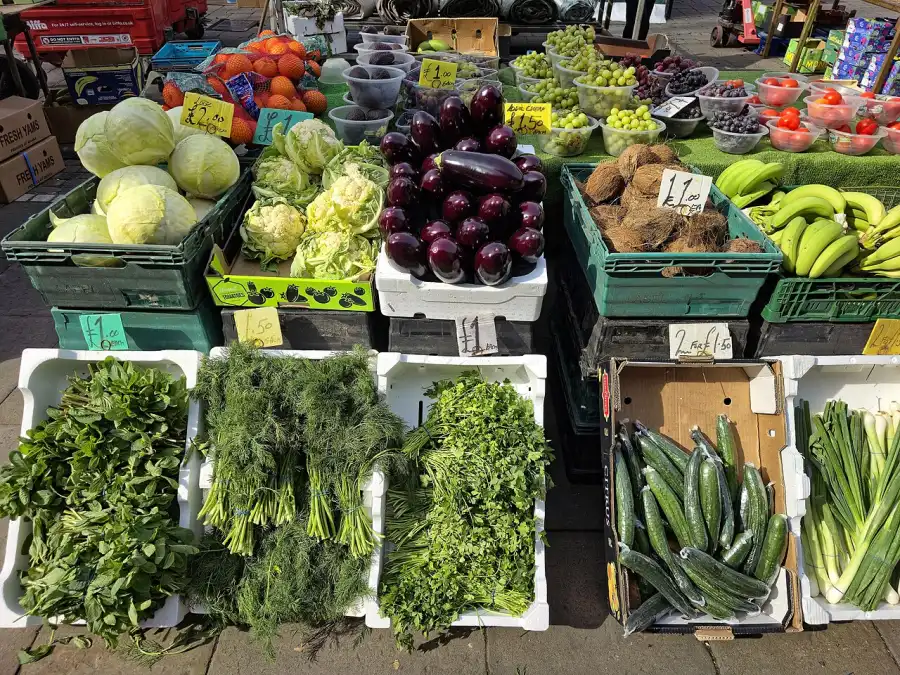
- Every Saturday morning, Maria goes to the market in the old town. It is not big, but it has everything: fruit, vegetables, bread, cheese and flowers. Maria likes the market more than the supermarket. The food is fresh, and the people are friendly.
- Her favourite stall is Paul's. Paul is an old farmer. He sells apples, potatoes and eggs from his farm. He knows all his customers by name, and he always asks Maria about her work and her family.
- Today Maria wants two kilos of apples and six eggs. Paul puts them in her bag. Then Maria looks for her wallet, but it is not there. It is at home, on the kitchen table. "Oh no! I'm sorry, Paul," she says. "I can't pay today."
- Paul smiles. "That's OK. You can pay next week. I know you, Maria."
- The next Saturday, Maria comes back with the money and a small cake for Paul. He is very happy. "This is why I love this market," Maria says. "Here, people know each other."
Words to know
- market A2
- a place where people sell food and other things — Markt, Marktplatz — mercado, marketa — marché — mercato — rynek, targ, targowisko — mercado, feira — рынок, базар — pazar, çarşı — ринок, базар
- fresh A2
- new and good to eat; not old — frisch — fresco, recién servido, hodierno — nouveau, frais — fresco, nuovo — świeży — fresco — свежий — taze — свіжий
- stall B1
- a table where someone sells things at a market — Stall — casilla, establo — stalle, étable — stalla — boxe, estábulo — стойло, хлев — хлів, стійло
- farmer A1
- a person who has a farm — Bauer, Landwirt, Farmer — granjero, granjera — agriculteur, cultivateur, fermière — contadino, contadina, agricoltore — rolnik, włościanin, rolniczka — agricultor, fazendeiro — фермер, крестьянин, земледелец — çiftçi — фермер, фермерка, селянин
- customer A2
- people who buy things from a shop or stall — Kunde, Kundin, Käufer — cliente — client, cliente — cliente — klient, klientka — cliente, freguês, freguesa — клиент, клиентка, покупатель — müşteri — клієнт, клієнтка, замовник
- wallet A2
- a small case for money and cards — Portemonnaie, Brieftasche, Geldbeutel — billetera, cartera — portefeuille — portafoglio — portfel, portmonetka — carteira — бумажник, кошелёк — cüzdan — гаманець
- pay A1
- give money for something — bezahlen, zahlen — pagar — payer — pagare — zapłacić, płacić — pagar — платить, заплатить, оплатить — ödemek — платити, заплатити
Text: Krumeto, “At the Saturday Market”, https://krumeto.com/read · CC BY 4.0 (https://creativecommons.org/licenses/by/4.0/) · written for Krumeto with the help of AI tools · Picture: Acabashi, CC BY-SA 4.0 (https://creativecommons.org/licenses/by-sa/4.0/), https://commons.wikimedia.org/wiki/File:Outdoor_market_fruit_and_vegetable_stall_Market_Place_Romford_London_01.jpg · Translations: English Wiktionary contributors, CC BY-SA 4.0 (https://creativecommons.org/licenses/by-sa/4.0/) · Worksheet: https://krumeto.com/read/saturday-market
A. Choose the right answer
- When does Maria go to the market? A1
- a) On Friday morning
- b) On Sunday afternoon
- c) Every evening after work
- d) Every Saturday morning
- What does Paul sell? A1
- a) Fish and meat
- b) Cakes and coffee
- c) Bread, cheese and flowers
- d) Apples, potatoes and eggs
- Where is Maria's wallet? A1
- a) In the supermarket
- b) At Paul's stall
- c) In her bag
- d) At home, on the kitchen table
- Why does Paul say, "You can pay next week"? A1
- a) He does not want her money.
- b) Maria has no bag.
- c) The apples are free on Saturdays.
- d) He knows Maria and trusts her.
- What does Maria bring the next Saturday? A1
- a) Flowers for Paul
- b) Eggs from her farm
- c) Her friend from work
- d) The money and a small cake
- In paragraph 1, the food is "fresh". This means the food is… A1
- a) new and good to eat
- b) very cheap
- c) from another country
- d) old and dry
B. Answer in full sentences
- Do you like markets or supermarkets more? Why?
- Paul trusts Maria. Tell a short story about a time when someone trusted you, or you trusted someone.
Answer key
- d) Every Saturday morning — Paragraph 1: "Every Saturday morning, Maria goes to the market."
- d) Apples, potatoes and eggs — Paragraph 2: "He sells apples, potatoes and eggs from his farm." The market sells bread and cheese, but Paul does not.
- d) At home, on the kitchen table — Paragraph 3: "It is at home, on the kitchen table."
- d) He knows Maria and trusts her. — Paragraph 4: "I know you, Maria." He knows her, so he is sure she will come back and pay.
- d) The money and a small cake — Paragraph 5: "Maria comes back with the money and a small cake for Paul."
- a) new and good to eat — Paragraph 1: fresh food is new, not old. That is one reason Maria likes the market.
Text: Krumeto, “At the Saturday Market”, https://krumeto.com/read · CC BY 4.0 (https://creativecommons.org/licenses/by/4.0/) · written for Krumeto with the help of AI tools · Picture: Acabashi, CC BY-SA 4.0 (https://creativecommons.org/licenses/by-sa/4.0/), https://commons.wikimedia.org/wiki/File:Outdoor_market_fruit_and_vegetable_stall_Market_Place_Romford_London_01.jpg · Translations: English Wiktionary contributors, CC BY-SA 4.0 (https://creativecommons.org/licenses/by-sa/4.0/) · Worksheet: https://krumeto.com/read/saturday-market