Zoo
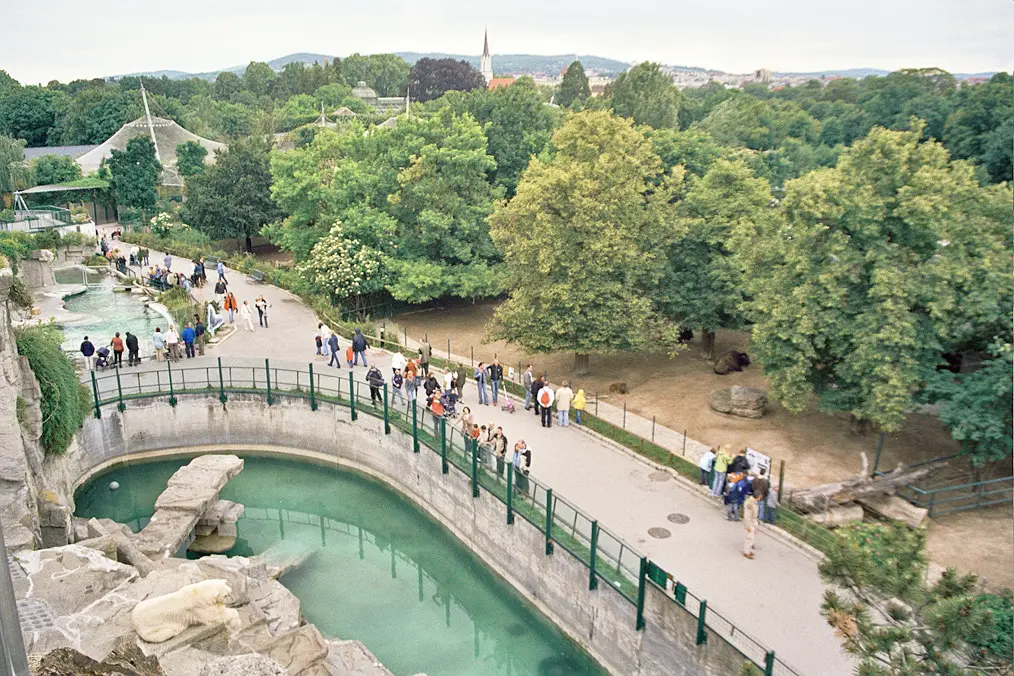
- A zoological garden, zoological park, or zoo is a place where many different species of animals are kept so that people can see and watch them.
- Modern zoos try not only to be for people's entertainment, but for education, research, and the conservation and protection of animals. Many zoos are centers where rare animals are preserved when they are in danger of dying out. These modern zoos also want to give the animals a natural life, so that they are healthy and behave normal. This is done for the animals, but also that people can see the animals as if they were in nature, and not in a zoo.
- Zoos cost money. They educate the public on the biological diversity that makes up the world. They help people and wildlife successfully coexist. They pursue continuing research and education for people. They preserve crucial natural resources. They work to provide the most natural environment possible for wildlife in their care. Without enough money they cannot do these things.
- Many zoos are not like the modern type of zoo. There the animals are held in bad conditions. They are kept in small cages. They get bored. They also get sick. Animals can also get very stressed in zoos.
- In a safari park visitors can drive their own vehicles or ride in vehicles given by the park to see the animals. Sometimes, visitors can feed the animals through the car windows. The first safari park was Whipsnade Park in Bedfordshire, England. It was opened by the Zoological Society of London in 1931.
Words to know
- species B2
- a group of animals or plants of the same kind — Art — especie — espèce — specie — gatunek — espécie — вид — tür — вид
- conservation B1
- protecting animals, plants and nature — Erhaltung, Erhalt — conservación — préservation, défense — conservazione — konserwacja — conservação — сохранение, консервация, охрана — збереження, консервація
- preserve B1
- kept safe from harm — bewahren, aufrechterhalten — conservar — conserver — preservare — zachować — conservar — сохранять, сохранить — muhafaza etmek — зберігати, зберегти
- behave B1
- act in a particular way — sich verhalten, sich benehmen — portarse — se comporter — comportarsi — zachować się, zachowywać się, postępować — comportar-se — вести себя, поступать, поступить — davranmak — поводитися, вести себе
- diversity C1
- the many different kinds of living things — Vielfalt, Vielfältigkeit, Diversität — diversidad — diversité — diversità — różnorodność — diversidade — разнообразие — çeşitlilik — різноманітність
- coexist
- live together in the same place without problems — koexistieren — coexistir — coexister — coesistere — współistnieć — coexistir — сосуществовать — співіснувати
- crucial B2
- extremely important — entscheidend, wichtig, kritisch — crucial — crucial — cruciale — krytyczny — crucial — решающий, ключевой — anahtar — вирішальний, критичний
- cage B1
- boxes or rooms with bars for keeping animals — Käfig — jaula, cabina — cage — gabbia, cabina — klatka — gaiola, jaula — клетка — kafes — клітка, кабіна
- stressed B1
- worried and nervous — betont — estresado — stressé — akcentowany — acentuado — в состоянии стресса, ударный, под ударением — yıpranmış — наголошений
- safari B1
- a trip to see wild animals in their natural area — Safari — safari — safari — safari — safari — safári — сафари — safari — сафарі
Text: Simple English Wikipedia, “Zoo”, Wikipedia contributors, https://simple.wikipedia.org/wiki/Zoo · CC BY-SA 4.0 (https://creativecommons.org/licenses/by-sa/4.0/) · shortened · Picture: Manfred Werner - User:Tsui, CC BY-SA 3.0 (https://creativecommons.org/licenses/by-sa/3.0/), https://commons.wikimedia.org/wiki/File:Tiergarten_Schoenbrunn_overview.jpg · Translations: English Wiktionary contributors, CC BY-SA 4.0 (https://creativecommons.org/licenses/by-sa/4.0/) · Worksheet: https://krumeto.com/read/zoo
A. Choose the right answer
- Apart from entertainment, what do modern zoos want to be for? A2
- a) Selling animals to other zoos
- b) Training animals to do shows
- c) Education, research and protecting animals
- d) Keeping as many animals as possible
- What do many zoos do for rare animals? A2
- a) They return all of them to nature as soon as possible.
- b) They keep them safe when they are in danger of dying out.
- c) They study them only in small cages, away from visitors.
- d) They let visitors feed them through car windows.
- Why do modern zoos try to give animals a natural life? B1
- a) Because it costs much less money than keeping cages
- b) So the animals can be sent back to the wild every year
- c) So the animals stay healthy and seem to be in nature
- d) Because safari parks require it by law in England
- What does paragraph 3 say zoos need in order to do their work? A2
- a) More species of animals
- b) Bigger cages
- c) Enough money
- d) More visitors with cars
- What happens to animals in zoos with bad conditions? A2
- a) They get bored, sick and stressed.
- b) They eat too much food.
- c) They escape from their cages.
- d) They become too friendly with visitors.
- How is a safari park different from an ordinary zoo? A2
- a) Visitors see the animals from vehicles.
- b) It keeps only rare and endangered species.
- c) The animals live in small cages there.
- d) It is used only for research, not visitors.
- Who opened the first safari park, and when? A2
- a) The Zoological Society of London, in 1913
- b) The town of Bedfordshire, in 1931
- c) Whipsnade Zoo's visitors, in 1913
- d) The Zoological Society of London, in 1931
B. Answer in full sentences
- Should zoos exist? Write a short opinion with two reasons for and one reason against.
- Plan your ideal zoo. How would you make the animals' lives as natural as possible?
Answer key
- c) Education, research and protecting animals — Paragraph 2 says modern zoos are also for education, research and the conservation and protection of animals.
- b) They keep them safe when they are in danger of dying out. — Paragraph 2 says many zoos are centres where rare animals are preserved when they are in danger of dying out.
- c) So the animals stay healthy and seem to be in nature — Paragraph 2 says this keeps the animals healthy and lets people see them as if they were in nature.
- c) Enough money — Paragraph 3 begins and ends with money: without enough money they cannot do these things.
- a) They get bored, sick and stressed. — Paragraph 4 says they get bored, get sick and can get very stressed.
- a) Visitors see the animals from vehicles. — Paragraph 5 says visitors can drive their own vehicles or ride in the park's vehicles.
- d) The Zoological Society of London, in 1931 — Paragraph 5 says Whipsnade Park was opened by the Zoological Society of London in 1931.
Text: Simple English Wikipedia, “Zoo”, Wikipedia contributors, https://simple.wikipedia.org/wiki/Zoo · CC BY-SA 4.0 (https://creativecommons.org/licenses/by-sa/4.0/) · shortened · Picture: Manfred Werner - User:Tsui, CC BY-SA 3.0 (https://creativecommons.org/licenses/by-sa/3.0/), https://commons.wikimedia.org/wiki/File:Tiergarten_Schoenbrunn_overview.jpg · Translations: English Wiktionary contributors, CC BY-SA 4.0 (https://creativecommons.org/licenses/by-sa/4.0/) · Worksheet: https://krumeto.com/read/zoo