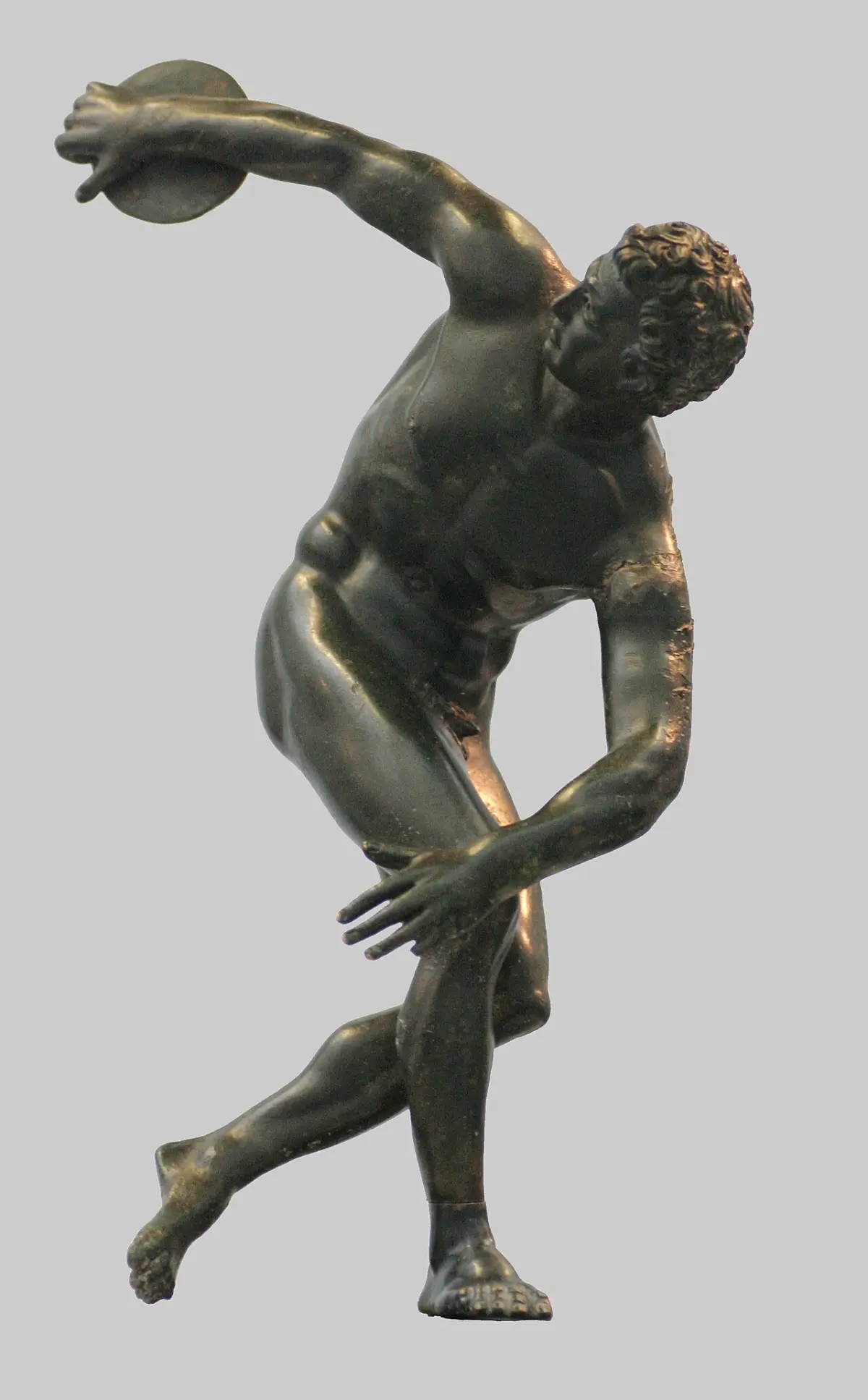
The Olympic Games (French: Jeux olympiques) is an important international event featuring summer and winter sports. Summer Olympic Games and Winter Olympic Games are held every four years. Originally, the ancient Olympic Games were held in Ancient Greece at Olympia. The first games were in 776 BC. They were held every four years until the 6th century AC. The first "modern" Olympics took place in 1896 in Athens, Greece. Athletes participate in the Olympics Games to represent their countries.
Over time the Olympics have become bigger. In old times, women were not allowed, but now there are women's events. The Winter Games were created for ice and snow sports. The Paralympic Games were created for athletes with physical disabilities. As well, the Olympics became bigger with the addition of the Youth Olympic Games for teenage athletes. World War I and World War II led to the cancellation of the 1916, 1940, and 1944 Games. As the decision-making body, the International Olympic Committee (IOC) is responsible for choosing the host city for each Olympic Games. The IOC is also responsible for choosing what sports are in the games. The creator of modern Olympics is Baron Pierre de Coubertin.
The celebration of the Games includes many rituals and symbols, such as Olympic flag and torch, as well as the opening and closing ceremonies. The first, second, and third-place finishers in each event receive, respectively, gold, silver, and bronze medals.