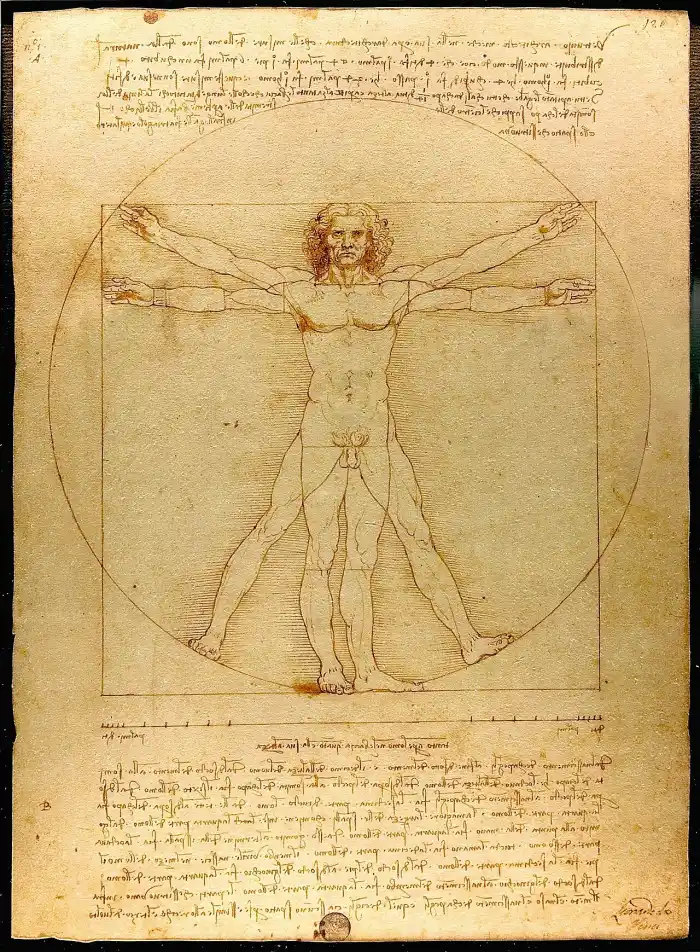
The Renaissance (UK: rin-AY-sənss, US: REN-ə-sahnss, "rebirth") was a European period of history and cultural movement taking place at the end of the Late Middle Ages and the beginning of the early modern era. It is variously defined as covering the 15th and 16th centuries or, more broadly, as lasting from the 14th century to the 17th. It was characterized by the European rediscovery and revival of the literary, philosophical, and artistic achievements of classical antiquity. Associated with great change in art, architecture, politics, literature, exploration and technology, the Renaissance was first centered in the Republic of Florence, then spread to the rest of Italy and later throughout Europe.
The Renaissance's intellectual basis was founded in its version of humanism, derived from the concept of Roman humanitas and the rediscovery of classical Greek philosophy, such as that of Protagoras, who said that "man is the measure of all things". Although the invention of metal movable type sped the dissemination of ideas from the later 15th century, the changes of the Renaissance were not uniform across Europe: the first traces appear in Italy as early as the late 13th century, in particular with the writings of Dante and the paintings of Giotto.
As a cultural movement, the Renaissance encompassed innovative flowering of literary Latin and an explosion of vernacular literatures, beginning with the 14th-century resurgence of learning based on classical sources, which contemporaries credited to Petrarch; the development of linear perspective and other techniques of rendering a more natural reality in painting; and gradual but widespread educational reform. It saw myriad artistic developments and contributions from such polymaths as Leonardo da Vinci and Michelangelo, who inspired the term "Renaissance man". In politics, the Renaissance contributed to the development of the customs and conventions of diplomacy. The period also saw revolutions in printing and navigation, as well as the introduction of modern banking and the field of accounting.
The Renaissance began in Italy during the crisis of the Late Middle Ages. It had a different period and characteristics north of the Alps and in Spain. In Italy, the period conventionally ends with the waning of humanism, and the advent of the Reformation (1517), the Sack of Rome (1527) or the Counter-Reformation (1545), and in art, the Baroque period. Proponents of a "long Renaissance," however, may propose that (outside of Italy) the period extended into the 17th century.